Eskenzi PR ad banner Eskenzi PR ad banner
  • About Us
Wednesday, 3 June, 2026
IT Security Guru
Eskenzi PR banner
  • Home
  • Features
  • Insight
  • Channel News
  • Events
    • Most Inspiring Women in Cyber 2026
  • Topics
    • Cloud Security
    • Cyber Crime
    • Cyber Warfare
    • Data Protection
    • DDoS
    • Hacking
    • Malware, Phishing and Ransomware
    • Mobile Security
    • Network Security
    • Regulation
    • Skills Gap
    • The Internet of Things
    • Threat Detection
    • AI and Machine Learning
    • Industrial Internet of Things
  • Multimedia
  • Product Reviews
  • About Us
No Result
View All Result
  • Home
  • Features
  • Insight
  • Channel News
  • Events
    • Most Inspiring Women in Cyber 2026
  • Topics
    • Cloud Security
    • Cyber Crime
    • Cyber Warfare
    • Data Protection
    • DDoS
    • Hacking
    • Malware, Phishing and Ransomware
    • Mobile Security
    • Network Security
    • Regulation
    • Skills Gap
    • The Internet of Things
    • Threat Detection
    • AI and Machine Learning
    • Industrial Internet of Things
  • Multimedia
  • Product Reviews
  • About Us
No Result
View All Result
IT Security Guru
No Result
View All Result

Staples latest retailer to investigate payment card data breach

by The Gurus
September 10, 2020
in Editor's News
Share on FacebookShare on Twitter

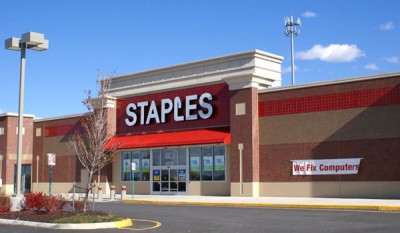
Staples has said it is investigating a possible breach of payment card data.

Following other retailers including Target, Home Depot, Kmart and Dairy Queen, Staples said it has contacted law enforcement about the matter and is in the process of investigating a potential issue involving credit card data.

Company spokesman Mark Cautela said in a statement, published by Reuters, that it takes the protection of customer information very seriously, and is working to resolve the situation.

Cautela said: “If Staples discovers an issue, it is important to note that customers are not responsible for any fraudulent activity on their credit cards that is reported on a timely basis.”

The story was initially discovered by security blogger Brian Krebs, who said that multiple banks in the Northeastern United States identified a pattern of credit and debit card fraud, suggesting that several branches of Staples were currently dealing with a data breach. According to more than a half-dozen sources at banks operating on the East Coast, it appears likely that fraudsters have succeeded in stealing customer card data from some subset of Staples locations, including seven Staples stores in Pennsylvania, at least three in New York City, and another in New Jersey.

Charles Sweeney, CEO of Bloxx, said: “Staples is possibly the next in a long list of US retailers to have fallen victim to a hack that would see its customer’s card details compromised. There appears to be a definite trend emerging, with hackers clearly viewing the retail industry as easy pickings.

“Cyber criminals constantly adapt their attack strategies. It is therefore very important that retailers ensure they are creating a dynamic and responsive security environment that can stand up to sustained and persistent attacks.”

Mark Bower, VP product management at Voltage Security, said that this could be another situation where point of sale (POS) malware has been pushed down to a few stores during a POS patch to add new features, or software upgrade cycle, resulting in compromise.

He said: “This seems to be a possible common thread among recent breaches, enabling attackers to propagate malware to many endpoints, though of course this is speculative based on limited data on this particular scenario.

“If malware gets into the POS and steals track or card data directly in memory, then nothing can be done in the POS to mitigate. Tokenization of card data directly in the POS, which is sometimes suggested as a defence, would not achieve anything and worse, possibly expose an open tokenization interface itself to the attacker which could lead to higher levels of compromise.

“The current crop of malware in the POS, like BlackPOS, steals track data as it arrives into memory instantly. Once grabbed, its game over as the data makes its way out to the malware controllers. Tokenization is only useful when combined with encryption in specially designed card reading equipment for secure end-to-end data capture to eliminate live data in vulnerable systems.

“It will be interesting to see how this breach unfolds. In all probability, I would hazard a guess it was quite avoidable through contemporary encryption meas
ures. Other large retailers who have suffered major breaches have already shifted gears to adopt such methods, based on years of success with their early-adopter peers who’ve not had a single incident since deployment.”

Tags: BreachdataPayment CardStaples
ShareTweet
Previous Post

China linked to iCloud and Windows account hijacking

Next Post

Black Hat EU 2014

Recent News

Nagomi Control Brings CTEM Into Action

IT Security Guru picks for Infosecurity Europe 2026

June 1, 2026
Nine in Ten Security Leaders Concerned About AI-Generated Code Risks as Salt Security Launches New Governance Tool

Nine in Ten Security Leaders Concerned About AI-Generated Code Risks as Salt Security Launches New Governance Tool

June 1, 2026
Acumen Cyber and AttackIQ Partner to Strengthen Cyber Defense Validation

Acumen Cyber and AttackIQ Partner to Strengthen Cyber Defense Validation

May 29, 2026
Check Point Launches AI Agents That Think Like Attackers as Autonomous Exploitation Reaches Critical Threat Level

Check Point Launches AI Agents That Think Like Attackers as Autonomous Exploitation Reaches Critical Threat Level

May 28, 2026

The IT Security Guru offers a daily news digest of all the best breaking IT security news stories first thing in the morning! Rather than you having to trawl through all the news feeds to find out what’s cooking, you can quickly get everything you need from this site!

Our Address: 10 London Mews, London, W2 1HY

Follow Us

© 2015 - 2024 IT Security Guru - Website Managed by Dessol

  • About Us
Manage Consent
To provide the best experiences, we use technologies like cookies to store and/or access device information. Consenting to these technologies will allow us to process data such as browsing behavior or unique IDs on this site. Not consenting or withdrawing consent, may adversely affect certain features and functions.
Functional Always active
The technical storage or access is strictly necessary for the legitimate purpose of enabling the use of a specific service explicitly requested by the subscriber or user, or for the sole purpose of carrying out the transmission of a communication over an electronic communications network.
Preferences
The technical storage or access is necessary for the legitimate purpose of storing preferences that are not requested by the subscriber or user.
Statistics
The technical storage or access that is used exclusively for statistical purposes. The technical storage or access that is used exclusively for anonymous statistical purposes. Without a subpoena, voluntary compliance on the part of your Internet Service Provider, or additional records from a third party, information stored or retrieved for this purpose alone cannot usually be used to identify you.
Marketing
The technical storage or access is required to create user profiles to send advertising, or to track the user on a website or across several websites for similar marketing purposes.
  • Manage options
  • Manage services
  • Manage {vendor_count} vendors
  • Read more about these purposes
View preferences
  • {title}
  • {title}
  • {title}
No Result
View All Result
  • Home
  • Features
  • Insight
  • Channel News
  • Events
    • Most Inspiring Women in Cyber 2026
  • Topics
    • Cloud Security
    • Cyber Crime
    • Cyber Warfare
    • Data Protection
    • DDoS
    • Hacking
    • Malware, Phishing and Ransomware
    • Mobile Security
    • Network Security
    • Regulation
    • Skills Gap
    • The Internet of Things
    • Threat Detection
    • AI and Machine Learning
    • Industrial Internet of Things
  • Multimedia
  • Product Reviews
  • About Us

© 2015 - 2024 IT Security Guru - Website Managed by Dessol