Eskenzi PR ad banner Eskenzi PR ad banner
  • About Us
Thursday, 4 June, 2026
IT Security Guru
Eskenzi PR banner
  • Home
  • Features
  • Insight
  • Channel News
  • Events
    • Most Inspiring Women in Cyber 2026
  • Topics
    • Cloud Security
    • Cyber Crime
    • Cyber Warfare
    • Data Protection
    • DDoS
    • Hacking
    • Malware, Phishing and Ransomware
    • Mobile Security
    • Network Security
    • Regulation
    • Skills Gap
    • The Internet of Things
    • Threat Detection
    • AI and Machine Learning
    • Industrial Internet of Things
  • Multimedia
  • Product Reviews
  • About Us
No Result
View All Result
  • Home
  • Features
  • Insight
  • Channel News
  • Events
    • Most Inspiring Women in Cyber 2026
  • Topics
    • Cloud Security
    • Cyber Crime
    • Cyber Warfare
    • Data Protection
    • DDoS
    • Hacking
    • Malware, Phishing and Ransomware
    • Mobile Security
    • Network Security
    • Regulation
    • Skills Gap
    • The Internet of Things
    • Threat Detection
    • AI and Machine Learning
    • Industrial Internet of Things
  • Multimedia
  • Product Reviews
  • About Us
No Result
View All Result
IT Security Guru
No Result
View All Result

Wearable technology "the latest technology that is not putting you in control of your data"

by The Gurus
September 10, 2020
in Editor's News
Share on FacebookShare on Twitter

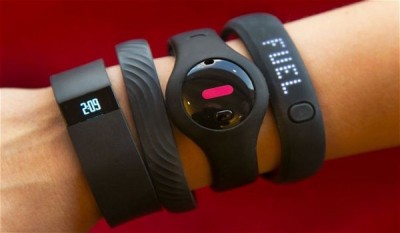
There are two divisions in wearable technology – one that collects information about you and another about the wearer.

Speaking at a Halsbury’s Law Exchange event in central London, wearable technology was determined to be as powerful as a computer and it was difficult to nail down the “fluid borders”.

Andrew Caldecott QC said: “The key legal argument is that something should allow us to keep control of our own private information and we should be entitled to when we release it. It all sounds attractive, but you get a problem when one person wants to tell a story and that story involves somebody else who is part of the story and doesn’t want it to be told. It is all about conflicting values.”

Eduardo Ustaran, partner at Hogan Lovells said that there are two relevant elements to this: that we lack awareness of the individual that the technology is around you; and the second is the surreptitious collection of data. “That challenges the most traditional understanding of data protection in Europe, which is all about data protection being about the individual being in control of information about them, but wearable technology is the latest manifestation of the type of technology that is not putting you in control of your data at all,” he said.

“You are unaware of the amount of information that is being collected and how it is being used, so it challenges the most common understanding in principle of data protection as we have understood them.”

Jessica Bland, senior researcher in technology futures at Nesta, said that this stretches the definition of technology, as technologies can stretch your response and capabilities, but there is an issue of where data is collected and how it is used. Bland highlighted how personal data is collected and aggregated and used by a corporate. “When did that change happen, and what does that mean for the product of data,” she asked. “It is quite a difficult change.

Bland also criticised a “tick box culture” that has extended to this, as the time between the action and collection is unknown, especially as users probably did not read or sign the terms and conditions of use about data collection.

Ustaran commented that developers are now being asked to do privacy impact assessments to assess the privacy implications and level of intrusion up front, and that will become a more popular tool to determine the compliance of the technology with the law.

“Mainly because the idea of consent is becoming more of a fallacy, as we don’t know what is going to happen to that information so the emphasis is shifted, and it is right that it is,” he said.

“The individual is determining whether they are happy with what is done with their information and the user of the technology knows whether it is intrusive or not.”

Caldecott commented that “collection rarely leads to litigation”, and it is normally about misuse of collection about you by others.


Tags: Data ProtectionprivacySurveillanceWearable
ShareTweet
Previous Post

Major security gap exists between consumer and B2B businesses

Next Post

ICO warns businesses to fix SQLi flaws

Recent News

Nagomi Control Brings CTEM Into Action

IT Security Guru picks for Infosecurity Europe 2026

June 1, 2026
Nine in Ten Security Leaders Concerned About AI-Generated Code Risks as Salt Security Launches New Governance Tool

Nine in Ten Security Leaders Concerned About AI-Generated Code Risks as Salt Security Launches New Governance Tool

June 1, 2026
Acumen Cyber and AttackIQ Partner to Strengthen Cyber Defense Validation

Acumen Cyber and AttackIQ Partner to Strengthen Cyber Defense Validation

May 29, 2026
Check Point Launches AI Agents That Think Like Attackers as Autonomous Exploitation Reaches Critical Threat Level

Check Point Launches AI Agents That Think Like Attackers as Autonomous Exploitation Reaches Critical Threat Level

May 28, 2026

The IT Security Guru offers a daily news digest of all the best breaking IT security news stories first thing in the morning! Rather than you having to trawl through all the news feeds to find out what’s cooking, you can quickly get everything you need from this site!

Our Address: 10 London Mews, London, W2 1HY

Follow Us

© 2015 - 2024 IT Security Guru - Website Managed by Dessol

  • About Us
Manage Consent
To provide the best experiences, we use technologies like cookies to store and/or access device information. Consenting to these technologies will allow us to process data such as browsing behavior or unique IDs on this site. Not consenting or withdrawing consent, may adversely affect certain features and functions.
Functional Always active
The technical storage or access is strictly necessary for the legitimate purpose of enabling the use of a specific service explicitly requested by the subscriber or user, or for the sole purpose of carrying out the transmission of a communication over an electronic communications network.
Preferences
The technical storage or access is necessary for the legitimate purpose of storing preferences that are not requested by the subscriber or user.
Statistics
The technical storage or access that is used exclusively for statistical purposes. The technical storage or access that is used exclusively for anonymous statistical purposes. Without a subpoena, voluntary compliance on the part of your Internet Service Provider, or additional records from a third party, information stored or retrieved for this purpose alone cannot usually be used to identify you.
Marketing
The technical storage or access is required to create user profiles to send advertising, or to track the user on a website or across several websites for similar marketing purposes.
  • Manage options
  • Manage services
  • Manage {vendor_count} vendors
  • Read more about these purposes
View preferences
  • {title}
  • {title}
  • {title}
No Result
View All Result
  • Home
  • Features
  • Insight
  • Channel News
  • Events
    • Most Inspiring Women in Cyber 2026
  • Topics
    • Cloud Security
    • Cyber Crime
    • Cyber Warfare
    • Data Protection
    • DDoS
    • Hacking
    • Malware, Phishing and Ransomware
    • Mobile Security
    • Network Security
    • Regulation
    • Skills Gap
    • The Internet of Things
    • Threat Detection
    • AI and Machine Learning
    • Industrial Internet of Things
  • Multimedia
  • Product Reviews
  • About Us

© 2015 - 2024 IT Security Guru - Website Managed by Dessol