Eskenzi PR ad banner Eskenzi PR ad banner
  • About Us
Thursday, 4 June, 2026
IT Security Guru
Eskenzi PR banner
  • Home
  • Features
  • Insight
  • Channel News
  • Events
    • Most Inspiring Women in Cyber 2026
  • Topics
    • Cloud Security
    • Cyber Crime
    • Cyber Warfare
    • Data Protection
    • DDoS
    • Hacking
    • Malware, Phishing and Ransomware
    • Mobile Security
    • Network Security
    • Regulation
    • Skills Gap
    • The Internet of Things
    • Threat Detection
    • AI and Machine Learning
    • Industrial Internet of Things
  • Multimedia
  • Product Reviews
  • About Us
No Result
View All Result
  • Home
  • Features
  • Insight
  • Channel News
  • Events
    • Most Inspiring Women in Cyber 2026
  • Topics
    • Cloud Security
    • Cyber Crime
    • Cyber Warfare
    • Data Protection
    • DDoS
    • Hacking
    • Malware, Phishing and Ransomware
    • Mobile Security
    • Network Security
    • Regulation
    • Skills Gap
    • The Internet of Things
    • Threat Detection
    • AI and Machine Learning
    • Industrial Internet of Things
  • Multimedia
  • Product Reviews
  • About Us
No Result
View All Result
IT Security Guru
No Result
View All Result

RSA President – Five ways that security can be saved

by The Gurus
April 21, 2015
in Editor's News
Share on FacebookShare on Twitter

Security needs fresh direction and perspective and five areas to resolve it have been identified.
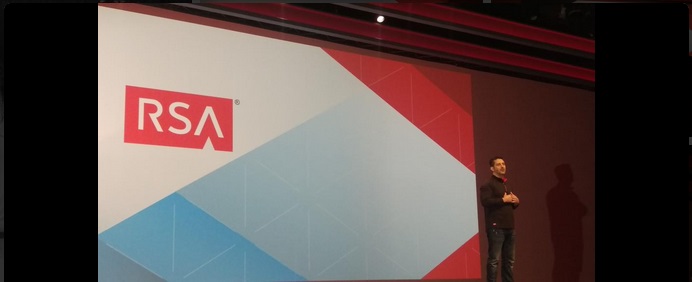
Speaking in the opening keynote at RSA Conference in San Francisco, RSA President Amit Yoran referred to the character Morpheus from the Matrix, who said there is a “difference between knowing and walking the path”, and the path forward requires knowing but not changing how we operate.
Identifying five key areas on navigating the new terrain, Yoran listed these as:
Stop believeing that advanced protections work, as they will fail. He said: “A focused adversary will get into your environment. Is this another castle wall that will be breached? No matter how high or smart our walls are, an advanced adversary will find a way.”
Second was to adopt a deep and pervasive level of visibility everywhere. Yoran said that many organisations are blind to the adversary and need pervasive and true visibility into their environments.
He said that this was describing “what SIEM meant and ought to be”, as you cannot do security without full packet visibility and knowing what systems are connecting with and what, and ultimately content itself to determine what is happening.
“This is a core requirement for any security programme,” he said. “The single most common mistake made is under-scoping an incident and without fully understanding an attacker you are tipping them off to what you are doing.”
Third was authentication and identity mattering more, not less. “Today’s anti-malware solutions are great and buy them, but do not confuse it for an advanced threat strategy,” he said. “The use of identity is a stepping stone for lateral movement and who is accessing what. Identify attack campaigns in the kill chain and move from mistake to disaster, do not make the mistake of trusting the trusted.”
Fourth was to use external threat intelligence. Yoran named several providers of threat intelligence and called them “credible sources” and encouraged the audience to leverage it for increased speed so that security analysts can respond to increased threats.
Finally, he said understand what is most important and what matters most to your organisation as categorisation is not exciting, but it is critical as it helps you prioritise for your organisation. “Focus on accounts, data, apps and devices and know what to defend and do it with all you have,” he said. “I have seen the difference it makes to organisations.”
In conclusion, Yoran said that we “are on a path to changing the paradigm that security has been on for decades”, and this was also starting at RSA.
He said: “We have sailed off the map and awaiting instruction is not an option. It is not a technology problem, is a mindset problem and the world has changed and it is not the terrain that is wrong.”

Tags: AuthenticationCyber Securityinformation securityinfosecProtectionRSARSA ConferenceRSACVisibility
ShareTweet
Previous Post

RSA – Better visibility and less reliance on technology is required to get out of the dark ages

Next Post

RSA – Department of Homeland Security head talks of continuous struggle with encrypted traffic

Recent News

Nagomi Control Brings CTEM Into Action

IT Security Guru picks for Infosecurity Europe 2026

June 1, 2026
Nine in Ten Security Leaders Concerned About AI-Generated Code Risks as Salt Security Launches New Governance Tool

Nine in Ten Security Leaders Concerned About AI-Generated Code Risks as Salt Security Launches New Governance Tool

June 1, 2026
Acumen Cyber and AttackIQ Partner to Strengthen Cyber Defense Validation

Acumen Cyber and AttackIQ Partner to Strengthen Cyber Defense Validation

May 29, 2026
Check Point Launches AI Agents That Think Like Attackers as Autonomous Exploitation Reaches Critical Threat Level

Check Point Launches AI Agents That Think Like Attackers as Autonomous Exploitation Reaches Critical Threat Level

May 28, 2026

The IT Security Guru offers a daily news digest of all the best breaking IT security news stories first thing in the morning! Rather than you having to trawl through all the news feeds to find out what’s cooking, you can quickly get everything you need from this site!

Our Address: 10 London Mews, London, W2 1HY

Follow Us

© 2015 - 2024 IT Security Guru - Website Managed by Dessol

  • About Us
Manage Consent
To provide the best experiences, we use technologies like cookies to store and/or access device information. Consenting to these technologies will allow us to process data such as browsing behavior or unique IDs on this site. Not consenting or withdrawing consent, may adversely affect certain features and functions.
Functional Always active
The technical storage or access is strictly necessary for the legitimate purpose of enabling the use of a specific service explicitly requested by the subscriber or user, or for the sole purpose of carrying out the transmission of a communication over an electronic communications network.
Preferences
The technical storage or access is necessary for the legitimate purpose of storing preferences that are not requested by the subscriber or user.
Statistics
The technical storage or access that is used exclusively for statistical purposes. The technical storage or access that is used exclusively for anonymous statistical purposes. Without a subpoena, voluntary compliance on the part of your Internet Service Provider, or additional records from a third party, information stored or retrieved for this purpose alone cannot usually be used to identify you.
Marketing
The technical storage or access is required to create user profiles to send advertising, or to track the user on a website or across several websites for similar marketing purposes.
  • Manage options
  • Manage services
  • Manage {vendor_count} vendors
  • Read more about these purposes
View preferences
  • {title}
  • {title}
  • {title}
No Result
View All Result
  • Home
  • Features
  • Insight
  • Channel News
  • Events
    • Most Inspiring Women in Cyber 2026
  • Topics
    • Cloud Security
    • Cyber Crime
    • Cyber Warfare
    • Data Protection
    • DDoS
    • Hacking
    • Malware, Phishing and Ransomware
    • Mobile Security
    • Network Security
    • Regulation
    • Skills Gap
    • The Internet of Things
    • Threat Detection
    • AI and Machine Learning
    • Industrial Internet of Things
  • Multimedia
  • Product Reviews
  • About Us

© 2015 - 2024 IT Security Guru - Website Managed by Dessol