
Eskenzi PR ad banner Eskenzi PR ad banner
  • About Us
Thursday, 4 June, 2026
IT Security Guru
Eskenzi PR banner
  • Home
  • Features
  • Insight
  • Channel News
  • Events
    • Most Inspiring Women in Cyber 2026
  • Topics
    • Cloud Security
    • Cyber Crime
    • Cyber Warfare
    • Data Protection
    • DDoS
    • Hacking
    • Malware, Phishing and Ransomware
    • Mobile Security
    • Network Security
    • Regulation
    • Skills Gap
    • The Internet of Things
    • Threat Detection
    • AI and Machine Learning
    • Industrial Internet of Things
  • Multimedia
  • Product Reviews
  • About Us
No Result
View All Result
  • Home
  • Features
  • Insight
  • Channel News
  • Events
    • Most Inspiring Women in Cyber 2026
  • Topics
    • Cloud Security
    • Cyber Crime
    • Cyber Warfare
    • Data Protection
    • DDoS
    • Hacking
    • Malware, Phishing and Ransomware
    • Mobile Security
    • Network Security
    • Regulation
    • Skills Gap
    • The Internet of Things
    • Threat Detection
    • AI and Machine Learning
    • Industrial Internet of Things
  • Multimedia
  • Product Reviews
  • About Us
No Result
View All Result
IT Security Guru
No Result
View All Result

Unsafe password policies leave online holiday shoppers vulnerable

by The Gurus
November 18, 2015
in Editor's News
computer-source-code
Share on FacebookShare on Twitter

As news comes that two thirds of shoppers will make their Christmas shopping purchases online, a new study by password manager Dashlane reveals the majority of the UK’s most popular e-commerce sites have unsafe password practices in its E-Commerce Security Roundup. Following recent major security breaches, this leaves today’s online shopper vulnerable to increasingly sophisticated hackers.
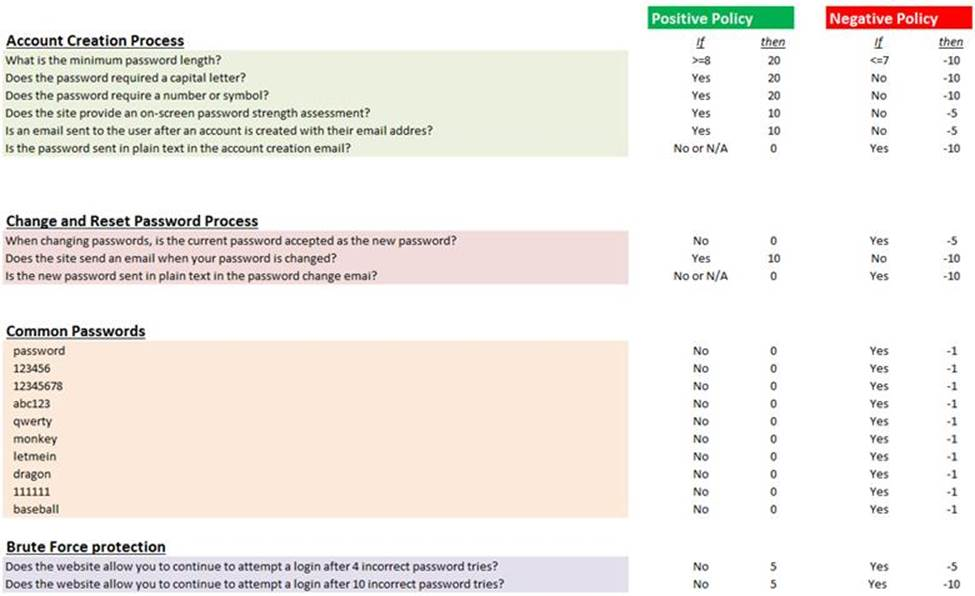
Overall, 80% of the sites Dashlane examined did not meet the minimum score of +50, and 52% received negative scores, indicating they have exceptionally weak password requirements.  Dashlane’s testers found that 80% of the sites they examined do not require users to have a capital letter  and  a number/symbol combination in their password. They also found that 56% of sites allow users to have a password less than eight characters long, including IKEA, Amazon UK, and eBay.
Dashlane CEO Emmanuel Schalit states,” A strong password is one that is at least eight characters long, and contains letters, as well as numbers and or symbols. This complexity is what keeps hackers from easily guessing your password and accessing your account.”
Further analysis revealed that 16% allow users to have use 10 of the most common (and weakest) passwords as their password. This means users on sites such as Wickes, River Island, and Asda Groceries can use easily guessable passwords, such as ‘password,’ ‘abc123’, and ‘123456’.
Although the majority of sites performed poorly, there were a select few who achieved high scores. For the third time in a row, Apple received a perfect score and was the highest ranked site in the Dashlane study. Apple requires long, complex alphanumeric passwords, and does not accept easily hackable passwords. Several notable sites also have strong password requirements, including Boots, John Lewis, and Very.
“Apple’s password security policies should serve as the gold standard for online retailers,” says Schalit. “By requiring their customers to create strong passwords they are ensuring they have a strong first line of defense. We applaud other retailers, such as Boots and John Lewis, who have also made great strides towards in making password security a priority.”
Passwords are the first line of defense to keep personal data safe online. It is extremely easy for even the most basic website to implement strong password requirements, yet some of UK’s largest online retailers are leaving their users exposed due to weak password requirements.
The E-Commerce Security Roundup is Dashlane’s second major security study in the UK following the inaugural study in the spring of 2014. Although the scope of the 2015 study was smaller in scale, a comparison can still be made between the previous results as the majority of the testing criteria remained the same, and Dashlane examined many of the same sites in all of its studies.
There were some overall improvements in the cumulate performance of the websites:

  • The number of sites that allow 10+ brute force logins decreased from 57% to 40%
  • The number of sites that accept the ten worst passwords decreased from 42% to 16%

Another improvement was seen in the percentage of sites that require a letter and/or number or symbol that increased from 42% to 72%. Two examples of this were Ebay and House of Fraser, whose scores both rose because their password requirements became stricter.
“It is encouraging to see positive password security trends in the world of e-commerce,” says Schalit. “Yet, while the numbers indicate retailers are moving in the right direction, much work remains. Given that it’s 2015, no website, regardless of how large or small it is, has an excuse for not implementing security policies that will better secure their users, as well as maintain the integrity of the brand by protecting the company from malicious attacks.”

Full Results

Untitled

Methodology

The study was conducted by Dashlane from October 19 – November 2, 2015. Dashlane examined 25 popular e-commerce websites. Each site was analysed based upon a set of 21 criteria. A criterion carried positive weight when it added security and negative when it added risk, giving each web site a total possible Dashlane Security Score between +100 and -100.
Untitled2
 

ShareTweet
Previous Post

Anonymous Release 'How To' Hack ISIS Guide

Next Post

Practitioners Give Global Cybersecurity a “C” According to New Research from Tenable Network Security

Recent News

Nagomi Control Brings CTEM Into Action

IT Security Guru picks for Infosecurity Europe 2026

June 1, 2026
Nine in Ten Security Leaders Concerned About AI-Generated Code Risks as Salt Security Launches New Governance Tool

Nine in Ten Security Leaders Concerned About AI-Generated Code Risks as Salt Security Launches New Governance Tool

June 1, 2026
Acumen Cyber and AttackIQ Partner to Strengthen Cyber Defense Validation

Acumen Cyber and AttackIQ Partner to Strengthen Cyber Defense Validation

May 29, 2026
Check Point Launches AI Agents That Think Like Attackers as Autonomous Exploitation Reaches Critical Threat Level

Check Point Launches AI Agents That Think Like Attackers as Autonomous Exploitation Reaches Critical Threat Level

May 28, 2026

The IT Security Guru offers a daily news digest of all the best breaking IT security news stories first thing in the morning! Rather than you having to trawl through all the news feeds to find out what’s cooking, you can quickly get everything you need from this site!

Our Address: 10 London Mews, London, W2 1HY

Follow Us

© 2015 - 2024 IT Security Guru - Website Managed by Dessol

  • About Us
Manage Consent
To provide the best experiences, we use technologies like cookies to store and/or access device information. Consenting to these technologies will allow us to process data such as browsing behavior or unique IDs on this site. Not consenting or withdrawing consent, may adversely affect certain features and functions.
Functional Always active
The technical storage or access is strictly necessary for the legitimate purpose of enabling the use of a specific service explicitly requested by the subscriber or user, or for the sole purpose of carrying out the transmission of a communication over an electronic communications network.
Preferences
The technical storage or access is necessary for the legitimate purpose of storing preferences that are not requested by the subscriber or user.
Statistics
The technical storage or access that is used exclusively for statistical purposes. The technical storage or access that is used exclusively for anonymous statistical purposes. Without a subpoena, voluntary compliance on the part of your Internet Service Provider, or additional records from a third party, information stored or retrieved for this purpose alone cannot usually be used to identify you.
Marketing
The technical storage or access is required to create user profiles to send advertising, or to track the user on a website or across several websites for similar marketing purposes.
  • Manage options
  • Manage services
  • Manage {vendor_count} vendors
  • Read more about these purposes
View preferences
  • {title}
  • {title}
  • {title}
No Result
View All Result
  • Home
  • Features
  • Insight
  • Channel News
  • Events
    • Most Inspiring Women in Cyber 2026
  • Topics
    • Cloud Security
    • Cyber Crime
    • Cyber Warfare
    • Data Protection
    • DDoS
    • Hacking
    • Malware, Phishing and Ransomware
    • Mobile Security
    • Network Security
    • Regulation
    • Skills Gap
    • The Internet of Things
    • Threat Detection
    • AI and Machine Learning
    • Industrial Internet of Things
  • Multimedia
  • Product Reviews
  • About Us

© 2015 - 2024 IT Security Guru - Website Managed by Dessol