Eskenzi PR ad banner Eskenzi PR ad banner
  • About Us
Thursday, 4 June, 2026
IT Security Guru
Eskenzi PR banner
  • Home
  • Features
  • Insight
  • Channel News
  • Events
    • Most Inspiring Women in Cyber 2026
  • Topics
    • Cloud Security
    • Cyber Crime
    • Cyber Warfare
    • Data Protection
    • DDoS
    • Hacking
    • Malware, Phishing and Ransomware
    • Mobile Security
    • Network Security
    • Regulation
    • Skills Gap
    • The Internet of Things
    • Threat Detection
    • AI and Machine Learning
    • Industrial Internet of Things
  • Multimedia
  • Product Reviews
  • About Us
No Result
View All Result
  • Home
  • Features
  • Insight
  • Channel News
  • Events
    • Most Inspiring Women in Cyber 2026
  • Topics
    • Cloud Security
    • Cyber Crime
    • Cyber Warfare
    • Data Protection
    • DDoS
    • Hacking
    • Malware, Phishing and Ransomware
    • Mobile Security
    • Network Security
    • Regulation
    • Skills Gap
    • The Internet of Things
    • Threat Detection
    • AI and Machine Learning
    • Industrial Internet of Things
  • Multimedia
  • Product Reviews
  • About Us
No Result
View All Result
IT Security Guru
No Result
View All Result

New Ransomware You Need To Beware Of: Locky

by The Gurus
March 16, 2016
in This Week's Gurus
Share on FacebookShare on Twitter

Deep in the dark web, shadowy figures lurk behind cobwebbed walls… Eyes shifting from side to side as hackers roam, scanning the darkness for their next big mark…
The dark web is the playground of the technological crime bosses and of them all, none are quite so bad as ransomware. Ransomware might have been around for a while, but the gangland wars have started and there’s a new kid on the block: Locky.
Read on to find out what ransomware is, what you need to know about Locky, and how to protect yourself from an attack.
What is ransomware?
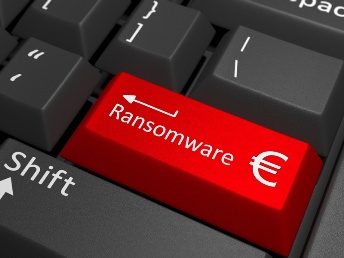
Ransomware is a malicious software (“malware”) that infiltrates your computer and hijacks your files. Ransomware then scrambles and locks your files so you can’t access them unless you pay a ransom to get them back.
How do you get infected with ransomware?
Ransomware generally enters your system in the form of a Trojan, tricking the user into downloading it by pretending to be innocuous, interesting, or useful. Once downloaded, the ransomware will immediately restrict your file access.
What types of ransomware are there?
While there are numerous different ransomware Trojans out there, a few are notorious for how quickly they’ve spread. The four major ones are:

  • Reveton
  • CryptoLocker
  • TorrentLocker
  • Cryptowall

And there’s now a new kid on the block, unfortunately. Known as Locky, this new ransomware is spreading fast and is more mercenary than anything we’ve seen before.
Locky: Beware this new ransomware
Locky generally enters your system through email. If you open the attachment with the email, you’ll see a page that looks like complete nonsense along with the request to enable macros to resolve poor data coding.
If you do enable macros, the document is able to run a code embedded by the hackers, allowing the Locky ransomware to download fully.
Once Locky is on your system, all your files will be scrambled and the file extensions changed to ‘.locky’. Locky is also able to scramble files from any other directories you can access from your computer, including removable drives, other networks, accessible servers and so on.
You’re then presented with a ransom note set as your wallpaper, explaining what’s happened and giving instructions on how to pay a Bitcoin ransom and unlock your files.
How you protect yourself from ransomware?
Malwares are one of those things you assume you could never fall for… until you do. These programs are insidious and the hackers who wield them are experts in the art of manipulation.
However, there are some important steps you should take as standard to protect yourself.

  • Always back up! Store your backup in an offsite backup centre so you can be sure your files are protected in the case of PC infiltration. (Read more on backing up and recovering data).
  • Don’t log in as domain administrator unless you need to. The more network shares you have access to at any one time, the more vulnerable your entire computer system is.
  • Never enable macros if you’ve received a document via email. Don’t even download emailed documents unless you’re confident about the source. You can use a viewer application to look inside the document before downloading to check, if you’re unsure.

And lastly…
Invest in a professional IT security service provider. IT is so fundamental to everything we do, in both a professional and a personal capacity, that it doesn’t make sense not to protect it.
 
Mike Hickson
LSA Systems
 

Tags: Cyber SecuritylockyRansomware
ShareTweet
Previous Post

16,081 Vulnerabilities Recorded in Close to 2,500 Applications in 2015

Next Post

To bypass code-signing checks, malware gang steals lots of certificates

Recent News

Nagomi Control Brings CTEM Into Action

IT Security Guru picks for Infosecurity Europe 2026

June 1, 2026
Nine in Ten Security Leaders Concerned About AI-Generated Code Risks as Salt Security Launches New Governance Tool

Nine in Ten Security Leaders Concerned About AI-Generated Code Risks as Salt Security Launches New Governance Tool

June 1, 2026
Acumen Cyber and AttackIQ Partner to Strengthen Cyber Defense Validation

Acumen Cyber and AttackIQ Partner to Strengthen Cyber Defense Validation

May 29, 2026
Check Point Launches AI Agents That Think Like Attackers as Autonomous Exploitation Reaches Critical Threat Level

Check Point Launches AI Agents That Think Like Attackers as Autonomous Exploitation Reaches Critical Threat Level

May 28, 2026

The IT Security Guru offers a daily news digest of all the best breaking IT security news stories first thing in the morning! Rather than you having to trawl through all the news feeds to find out what’s cooking, you can quickly get everything you need from this site!

Our Address: 10 London Mews, London, W2 1HY

Follow Us

© 2015 - 2024 IT Security Guru - Website Managed by Dessol

  • About Us
Manage Consent
To provide the best experiences, we use technologies like cookies to store and/or access device information. Consenting to these technologies will allow us to process data such as browsing behavior or unique IDs on this site. Not consenting or withdrawing consent, may adversely affect certain features and functions.
Functional Always active
The technical storage or access is strictly necessary for the legitimate purpose of enabling the use of a specific service explicitly requested by the subscriber or user, or for the sole purpose of carrying out the transmission of a communication over an electronic communications network.
Preferences
The technical storage or access is necessary for the legitimate purpose of storing preferences that are not requested by the subscriber or user.
Statistics
The technical storage or access that is used exclusively for statistical purposes. The technical storage or access that is used exclusively for anonymous statistical purposes. Without a subpoena, voluntary compliance on the part of your Internet Service Provider, or additional records from a third party, information stored or retrieved for this purpose alone cannot usually be used to identify you.
Marketing
The technical storage or access is required to create user profiles to send advertising, or to track the user on a website or across several websites for similar marketing purposes.
  • Manage options
  • Manage services
  • Manage {vendor_count} vendors
  • Read more about these purposes
View preferences
  • {title}
  • {title}
  • {title}
No Result
View All Result
  • Home
  • Features
  • Insight
  • Channel News
  • Events
    • Most Inspiring Women in Cyber 2026
  • Topics
    • Cloud Security
    • Cyber Crime
    • Cyber Warfare
    • Data Protection
    • DDoS
    • Hacking
    • Malware, Phishing and Ransomware
    • Mobile Security
    • Network Security
    • Regulation
    • Skills Gap
    • The Internet of Things
    • Threat Detection
    • AI and Machine Learning
    • Industrial Internet of Things
  • Multimedia
  • Product Reviews
  • About Us

© 2015 - 2024 IT Security Guru - Website Managed by Dessol