Eskenzi PR ad banner Eskenzi PR ad banner
  • About Us
Thursday, 4 June, 2026
IT Security Guru
Eskenzi PR banner
  • Home
  • Features
  • Insight
  • Channel News
  • Events
    • Most Inspiring Women in Cyber 2026
  • Topics
    • Cloud Security
    • Cyber Crime
    • Cyber Warfare
    • Data Protection
    • DDoS
    • Hacking
    • Malware, Phishing and Ransomware
    • Mobile Security
    • Network Security
    • Regulation
    • Skills Gap
    • The Internet of Things
    • Threat Detection
    • AI and Machine Learning
    • Industrial Internet of Things
  • Multimedia
  • Product Reviews
  • About Us
No Result
View All Result
  • Home
  • Features
  • Insight
  • Channel News
  • Events
    • Most Inspiring Women in Cyber 2026
  • Topics
    • Cloud Security
    • Cyber Crime
    • Cyber Warfare
    • Data Protection
    • DDoS
    • Hacking
    • Malware, Phishing and Ransomware
    • Mobile Security
    • Network Security
    • Regulation
    • Skills Gap
    • The Internet of Things
    • Threat Detection
    • AI and Machine Learning
    • Industrial Internet of Things
  • Multimedia
  • Product Reviews
  • About Us
No Result
View All Result
IT Security Guru
No Result
View All Result

New research shows Tesla cars can be stolen by hacking the app

by The Gurus
November 24, 2016
in Editor's News
hacking
Share on FacebookShare on Twitter

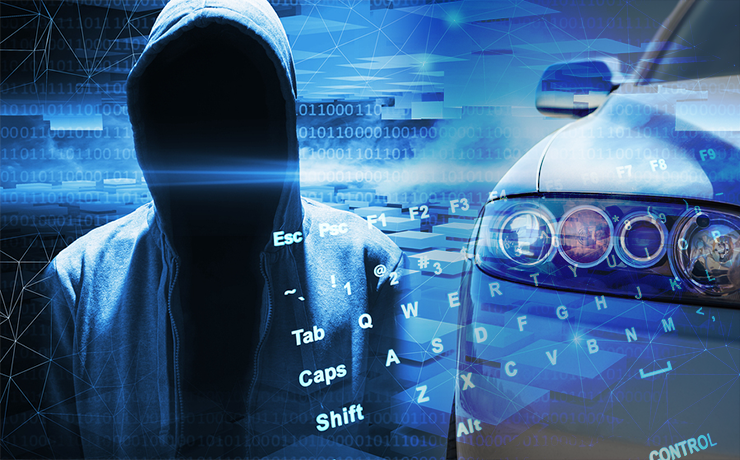
Research by Norwegian app security firm Promon has demonstrated that, by exploiting a lack of security in the Tesla smartphone app, cybercriminals could take control of the company’s vehicles, to the point where they can locate, unlock and drive the car away unhindered. Such a hack gives criminals total control of the vehicle, providing additional functionality to that exposed by Keen Security Labs in a different hack in late September.

As illustrated in a video produced by Promon, experts at the company have been able to take full control of a Tesla vehicle, including finding where the car is parked, opening the door and enabling its keyless driving functionality. Crucially, this is all done by attacking and taking control of the Tesla app. This underlines the vital importance of app security, and the wider implications this could have for IoT-connected devices in general.

Tom Lysemose Hansen, founder and CTO at Promon, said: “Keen Security Labs’ recent research exploited flaws in the CAN bus systems of Tesla vehicles, enabling them to take control of a limited number of functions of the car. Our test is the first one to use the Tesla app as an entry point, and goes a step further by showing that a compromised app can lead directly to the theft of a car.”

One way for the hack to work is for cybercriminals to set up a Wi-Fi hotspot, likely close to a public Tesla charging point. When Tesla users log in and visit a page, an advert targeting car owners appears, offering an incentive such as a free meal. When clicking this link and downloading the accompanying app, hackers can gain access to the user’s mobile device, which enables them to attack the Tesla app.

According to Hansen, the ease with which any tech-savvy criminal can steal a Tesla car in this way is indicative of a need for a much greater focus on in-app security across all IoT-connected devices and applications.

He added: “Mobile-focused criminals are more skilled than ever before, and are using a lack of security in mobile apps as an increasingly lucrative source of revenue. Remotely controlling and stealing Tesla cars is a particularly dangerous example of just what can be done, but in theory, any app without the necessary protection in place could be affected.

“Implementing this app security should be a priority for any business with an app containing sensitive user data. One way to achieve this is by introducing self-defending app software that protects the app from the inside out, greatly reducing the possibility of a cyber attack.

“By moving away from having a physical car key to unlock the door, Tesla is basically taking the same step as banks and the payment industry. Physical tokens are replaced by ‘mobile tokens’. Hence, we strongly believe that Tesla and the car industry needs to provide a comparable level of security, which is certainly not the case today.”

Promon is in close dialogue with Tesla in order to address these app security issues.

Hansen concluded: “Tesla is a shining example of how technological advances are providing unprecedented levels of innovation and user convenience. However, our increasingly app-focused world needs to be urgently secured, to prevent criminals from seizing their opportunity on a large scale.”

To view Promon’s video in full, please click here.

ShareTweet
Previous Post

Document Management + Email Management + Transaction Management = Mitigating the Impact of Security Breaches

Next Post

Bletchley Park Reactivated

Recent News

Frontline Workers Twice as Likely to Use Unapproved AI

Frontline Workers Twice as Likely to Use Unapproved AI

June 4, 2026
Nagomi Control Brings CTEM Into Action

IT Security Guru picks for Infosecurity Europe 2026

June 1, 2026
Nine in Ten Security Leaders Concerned About AI-Generated Code Risks as Salt Security Launches New Governance Tool

Nine in Ten Security Leaders Concerned About AI-Generated Code Risks as Salt Security Launches New Governance Tool

June 1, 2026
Acumen Cyber and AttackIQ Partner to Strengthen Cyber Defense Validation

Acumen Cyber and AttackIQ Partner to Strengthen Cyber Defense Validation

May 29, 2026

The IT Security Guru offers a daily news digest of all the best breaking IT security news stories first thing in the morning! Rather than you having to trawl through all the news feeds to find out what’s cooking, you can quickly get everything you need from this site!

Our Address: 10 London Mews, London, W2 1HY

Follow Us

© 2015 - 2024 IT Security Guru - Website Managed by Dessol

  • About Us
Manage Consent
To provide the best experiences, we use technologies like cookies to store and/or access device information. Consenting to these technologies will allow us to process data such as browsing behavior or unique IDs on this site. Not consenting or withdrawing consent, may adversely affect certain features and functions.
Functional Always active
The technical storage or access is strictly necessary for the legitimate purpose of enabling the use of a specific service explicitly requested by the subscriber or user, or for the sole purpose of carrying out the transmission of a communication over an electronic communications network.
Preferences
The technical storage or access is necessary for the legitimate purpose of storing preferences that are not requested by the subscriber or user.
Statistics
The technical storage or access that is used exclusively for statistical purposes. The technical storage or access that is used exclusively for anonymous statistical purposes. Without a subpoena, voluntary compliance on the part of your Internet Service Provider, or additional records from a third party, information stored or retrieved for this purpose alone cannot usually be used to identify you.
Marketing
The technical storage or access is required to create user profiles to send advertising, or to track the user on a website or across several websites for similar marketing purposes.
  • Manage options
  • Manage services
  • Manage {vendor_count} vendors
  • Read more about these purposes
View preferences
  • {title}
  • {title}
  • {title}
No Result
View All Result
  • Home
  • Features
  • Insight
  • Channel News
  • Events
    • Most Inspiring Women in Cyber 2026
  • Topics
    • Cloud Security
    • Cyber Crime
    • Cyber Warfare
    • Data Protection
    • DDoS
    • Hacking
    • Malware, Phishing and Ransomware
    • Mobile Security
    • Network Security
    • Regulation
    • Skills Gap
    • The Internet of Things
    • Threat Detection
    • AI and Machine Learning
    • Industrial Internet of Things
  • Multimedia
  • Product Reviews
  • About Us

© 2015 - 2024 IT Security Guru - Website Managed by Dessol