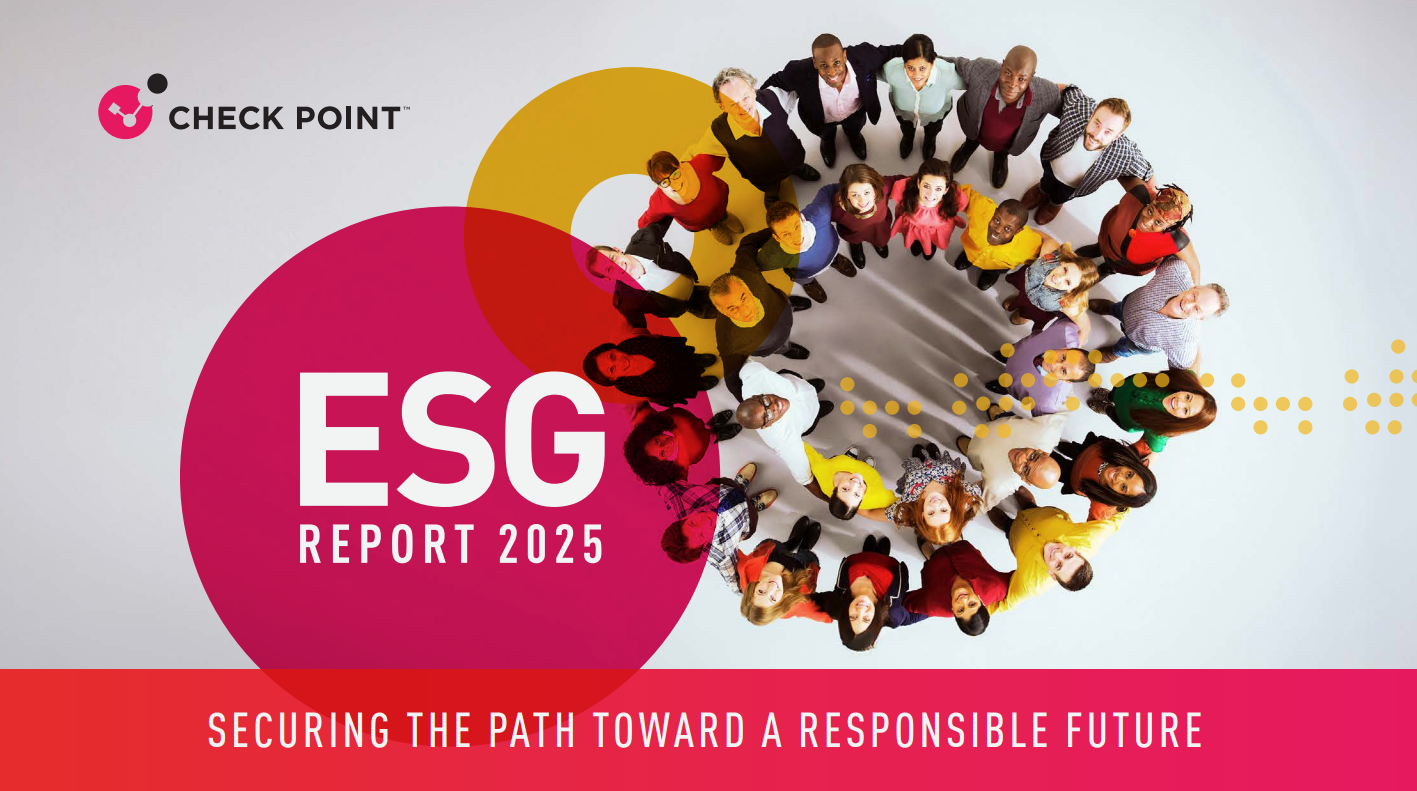
Check Point Software has revealed that its ThreatCloud AI platform prevented 4.6 billion cyberattacks over the past year, as the security vendor published its fourth annual Environmental, Social, and Governance (ESG) report, titled “Securing the Path Toward a Responsible Future.”

The report sets out how the NASDAQ-listed firm is positioning itself at the intersection of artificial intelligence and cyber security, an area it says will define the next decade of digital risk. Alongside the attack-prevention figures, Check Point confirmed it has secured FedRAMP and GovRAMP authorisation, clearing the way for the company to serve U.S. federal, state and local government bodies with its prevention-first security stack.
“The intersection of AI and cyber security will define the next decade of digital risk,” said Nadav Zafrir, CEO of Check Point. “Check Point stands at that intersection, not as a bystander, but as the organisation that has spent more than thirty years building the expertise, technology, solutions, and relationships needed to lead through exactly this kind of inflection point.”
AI-First Security Strategy
Much of the report is dedicated to how Check Point sharpened its AI strategy through 2025. The vendor made a number of acquisitions during the year aimed at strengthening its exposure management and AI security capabilities, and joined OpenAI’s Trusted Access for Cyber programme and its Daybreak initiative, both aimed at improving how AI providers and security vendors collaborate on emerging threats.
Check Point also confirmed it has integrated its Workforce AI product with Claude’s Compliance API, giving enterprise customers deeper visibility into how employees are using AI tools across the business — an increasingly pressing concern for security and compliance teams as generative AI adoption accelerates inside organisations.
Governance of AI Deployments
On the governance side, Check Point said its responsible AI approach now extends across the business, covering both the governance of its own AI-powered products and its internal AI deployments. The company reported 78% board director independence, with full independence across all board committees, and said it achieved 100% compliance with ethics and compliance training requirements during the year.
The report also touched on the company’s environmental performance, including a 31% year-on-year reduction in Scope 1 and 2 emissions intensity and the first-ever disclosure of Scope 3 emissions across its value chain, alongside social investment figures showing that close to 800,000 people have been trained in cybersecurity since 2022.
Check Point said its prevention-first mission remains unchanged, but that the scale, complexity and urgency of that mission has grown as AI reshapes the threat landscape. The full 2025 ESG report is available on the Check Point website.