Executives may be more relaxed about handing IT decisions to AI than the managers who answer to them, according to new research from TeamViewer.

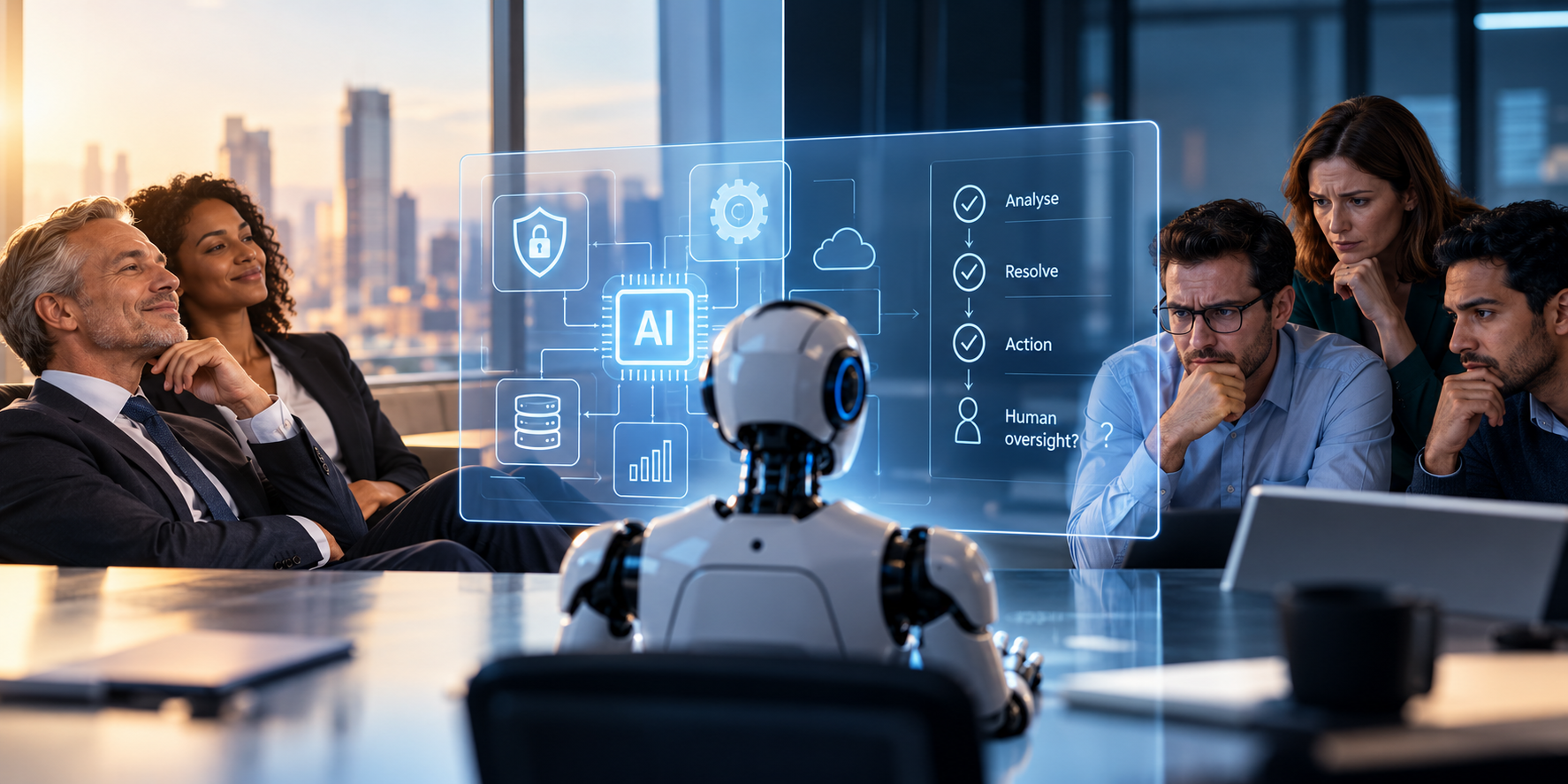
The study found that 46% of middle managers want a human involved when AI resolves IT issues that could affect security, data or business operations. Among executive leaders, the figure falls to 24%.
The gap suggests that those closest to day-to-day AI-driven work want more oversight than the leaders setting AI strategy. It comes as security, privacy and risk concerns remain the most commonly cited barrier to AI adoption, named by 45% of IT decision-makers surveyed.
Unauthorised access tops the list of worries
Caution grows as AI systems are given more autonomy. Almost a third (30%) of workers named security risks or unauthorised access among their biggest concerns about AI acting without human involvement. That rose to 33% among both middle and senior managers, compared with 23% of executives.
Restricting what AI can access appears to ease some of that anxiety. Forty-two percent of senior managers said access limits would make them more comfortable with AI fixing problems on its own, compared with 37% of middle managers and 32% of executives.
Jan Bee, CISO at TeamViewer, said security had to be built in from the outset. “Security cannot be added after autonomy is introduced. The more authority an AI system has, the more important it is that its actions are transparent and that clear boundaries define when human approval is required,” he said.
He added that leaders “should also not assume that their own comfort with autonomy is shared across the organisation.”
Energy sector most cautious
Attitudes varied sharply by industry. In energy, utilities, and oil and gas, 49% of workers want a human in the loop for security-sensitive AI decisions. In marketing, media and communications, the figure was 28%.
Transparency builds trust
Across the workforce, 39% said strong security and privacy protections would make them more comfortable with autonomous AI. Again, managers were more concerned than executives: 46% of senior managers and 43% of middle managers cited protections, against 34% of executive leaders.
Visibility also matters. Nearly three-quarters (73%) of workers said they are more likely to trust AI when it shows what it is doing and why, while 70% are comfortable with AI taking action as long as they can step in when needed. Just over a third (36%) want limits on what AI can access before it acts independently.
However, many workers are unsure where the line sits. Over half (51%) said they do not always know when to trust AI output and when to verify it.
Who is to blame when AI gets it wrong?
Accountability is another grey area. Fewer than half (49%) of respondents said it is clear who is responsible when an autonomous system makes a mistake.
Opinions on where responsibility should lie were split. A quarter (26%) said it should fall to IT, while 25% said it rests with themselves. A further 17% said no one should be held responsible because a system made the error.
The findings indicate that organisations rolling out autonomous AI may need to set clearer rules on when AI can act alone, when oversight is required, and who owns the outcome when things go wrong.