Eskenzi PR ad banner Eskenzi PR ad banner
  • About Us
Thursday, 4 June, 2026
IT Security Guru
Eskenzi PR banner
  • Home
  • Features
  • Insight
  • Channel News
  • Events
    • Most Inspiring Women in Cyber 2026
  • Topics
    • Cloud Security
    • Cyber Crime
    • Cyber Warfare
    • Data Protection
    • DDoS
    • Hacking
    • Malware, Phishing and Ransomware
    • Mobile Security
    • Network Security
    • Regulation
    • Skills Gap
    • The Internet of Things
    • Threat Detection
    • AI and Machine Learning
    • Industrial Internet of Things
  • Multimedia
  • Product Reviews
  • About Us
No Result
View All Result
  • Home
  • Features
  • Insight
  • Channel News
  • Events
    • Most Inspiring Women in Cyber 2026
  • Topics
    • Cloud Security
    • Cyber Crime
    • Cyber Warfare
    • Data Protection
    • DDoS
    • Hacking
    • Malware, Phishing and Ransomware
    • Mobile Security
    • Network Security
    • Regulation
    • Skills Gap
    • The Internet of Things
    • Threat Detection
    • AI and Machine Learning
    • Industrial Internet of Things
  • Multimedia
  • Product Reviews
  • About Us
No Result
View All Result
IT Security Guru
No Result
View All Result

WISeKey and Kaspersky Lab join forces to keep wearables safe from cyber-thieves

by The Gurus
January 15, 2016
in Editor's News
Share on FacebookShare on Twitter

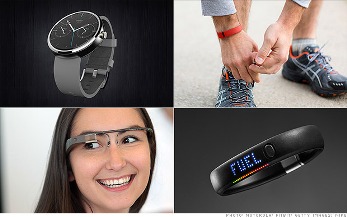
With smart watches, fitness trackers and payment wristbands expected to account for one in five mobile payment transactions by 2020 – representing $500 billion a year* – it is inevitable that they will become a growing target for cyber-attack, according to WISeKey and Kaspersky Lab. The two companies have today announced that they are developing technology that will deeply integrate authentication and data encryption into new wearable devices, enabling them to safely connect, communicate and exchange financial data.
The interaction between devices, known as the Internet of Things is set to transform the business and consumer landscape.  The market for connected wearables alone is estimated to be growing by 35 per cent a year**. However, many connected devices and the data they exchange remain worryingly unprotected, and this will become even more serious as more of them are used to make payments.
Premium watch manufacturers, such as Bulgari, already integrate WISeKey’s patented security software, WIS.WATCH into their connected watches. This enables a customer to securely identify and authenticate their device, to connect it to other devices such as their smartphone and to access applications, personal data and secure cloud storage.
Under the new partnership, Kaspersky Lab’s secure software development kit for mobile devices will be included in this solution, adding a further layer of security and paving the way for ultra-secure mobile payments.
“This cooperation between WISeKey and Kaspersky Lab represents a breakthrough in IoT cyber-security.  The combination of trust and convenience that will be delivered to wearable devices opens the door to implementations in other sectors, where the same approach can support a variety of other IoT applications,” said Carlos Moreira, CEO of WISeKey.
Eugene Kaspersky, chairman and CEO of Kaspersky Lab, said: “We live in a truly connected world. But as the number of connected devices continues to grow, so does the number of threats. And unfortunately there are millions of devices in active use today that were never designed to be secure. But security should be built-in from the very outset. There’s an urgent need to establish and implement higher levels of security for IoT devices, and we’re happy to work with WISeKey in the development of such a solution”.
The collaborative solution will be based on WISeKey’s ‘Cryptographic Root of Trust for IoT’ and on its NFCTrusted© technology. Between them, these technologies ensure the authenticity, confidentiality and integrity of online transactions. The Cryptographic Root of Trust has been installed in over 2.6 billion desktop, browsers, mobile devices, SSL certificates and connected devices.
*Source: Tractica report
**Source: BI Intelligence Estimates
 

ShareTweet
Previous Post

US invaded by industrial cyber attacks

Next Post

Why relying on standards is best for secure Cloud Computing

Recent News

Nagomi Control Brings CTEM Into Action

IT Security Guru picks for Infosecurity Europe 2026

June 1, 2026
Nine in Ten Security Leaders Concerned About AI-Generated Code Risks as Salt Security Launches New Governance Tool

Nine in Ten Security Leaders Concerned About AI-Generated Code Risks as Salt Security Launches New Governance Tool

June 1, 2026
Acumen Cyber and AttackIQ Partner to Strengthen Cyber Defense Validation

Acumen Cyber and AttackIQ Partner to Strengthen Cyber Defense Validation

May 29, 2026
Check Point Launches AI Agents That Think Like Attackers as Autonomous Exploitation Reaches Critical Threat Level

Check Point Launches AI Agents That Think Like Attackers as Autonomous Exploitation Reaches Critical Threat Level

May 28, 2026

The IT Security Guru offers a daily news digest of all the best breaking IT security news stories first thing in the morning! Rather than you having to trawl through all the news feeds to find out what’s cooking, you can quickly get everything you need from this site!

Our Address: 10 London Mews, London, W2 1HY

Follow Us

© 2015 - 2024 IT Security Guru - Website Managed by Dessol

  • About Us
Manage Consent
To provide the best experiences, we use technologies like cookies to store and/or access device information. Consenting to these technologies will allow us to process data such as browsing behavior or unique IDs on this site. Not consenting or withdrawing consent, may adversely affect certain features and functions.
Functional Always active
The technical storage or access is strictly necessary for the legitimate purpose of enabling the use of a specific service explicitly requested by the subscriber or user, or for the sole purpose of carrying out the transmission of a communication over an electronic communications network.
Preferences
The technical storage or access is necessary for the legitimate purpose of storing preferences that are not requested by the subscriber or user.
Statistics
The technical storage or access that is used exclusively for statistical purposes. The technical storage or access that is used exclusively for anonymous statistical purposes. Without a subpoena, voluntary compliance on the part of your Internet Service Provider, or additional records from a third party, information stored or retrieved for this purpose alone cannot usually be used to identify you.
Marketing
The technical storage or access is required to create user profiles to send advertising, or to track the user on a website or across several websites for similar marketing purposes.
  • Manage options
  • Manage services
  • Manage {vendor_count} vendors
  • Read more about these purposes
View preferences
  • {title}
  • {title}
  • {title}
No Result
View All Result
  • Home
  • Features
  • Insight
  • Channel News
  • Events
    • Most Inspiring Women in Cyber 2026
  • Topics
    • Cloud Security
    • Cyber Crime
    • Cyber Warfare
    • Data Protection
    • DDoS
    • Hacking
    • Malware, Phishing and Ransomware
    • Mobile Security
    • Network Security
    • Regulation
    • Skills Gap
    • The Internet of Things
    • Threat Detection
    • AI and Machine Learning
    • Industrial Internet of Things
  • Multimedia
  • Product Reviews
  • About Us

© 2015 - 2024 IT Security Guru - Website Managed by Dessol