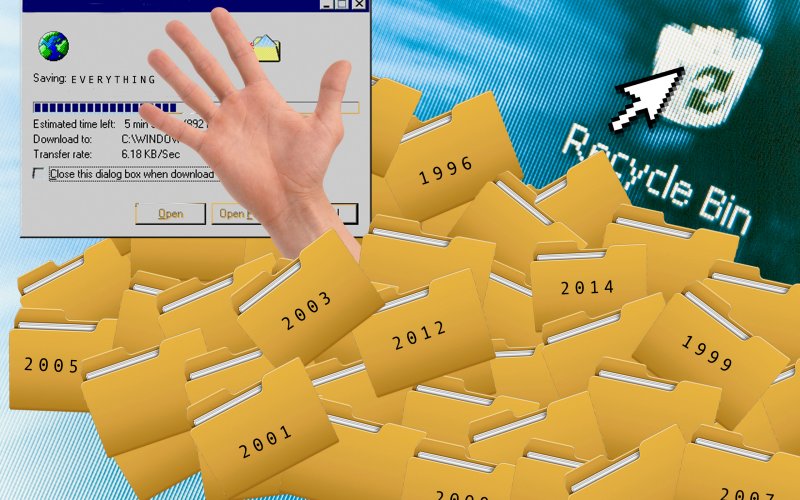
Veritas Technologies, the leader in information management, today released research showing that 82 per cent of IT decision makers admit they are hoarders of data and digital files. Following its Data Genomics* project that analysed tens of billions of files and their attributes from many of its customers’ unstructured data environments, Veritas conducted a study to analyse the data storage habits of IT decision makers and global office professionals.
The research, commissioned by Veritas, was conducted among 10,022 global office professionals and IT decision makers to look into how individuals manage data. Significant concerns regarding data hoarding were highlighted, with 73 per cent of all respondents indicating that they store data that could be potentially harmful to their organisations. These include: unencrypted personal records, job applications to other companies, unencrypted company secrets and embarrassing employee correspondence.
Major issues highlighted in the research include:
The Digital Hoarding Struggle is Real
The findings highlighted that IT decision makers are hoarding their digital files and saving 54 per cent of all the data they create. In addition, 41 per cent* of all digital files created go unmodified for three or more years. While this indicates that data hoarding behaviour is common across organisations, many office professionals (48 per cent) admit that they wouldn’t trust a data hoarder to turn in a project on time. Respondents are also willing to do the unexpected in order to keep the files they’ve hoarded, giving up their clothes and weekends rather than deleting their files. Almost half (45 per cent) would rather work weekends for three months than get rid of all of their digital files. Meanwhile, 46 per cent would rather throw out all of their clothes than all of their digital files.
Employees Overwhelmed by the Deluge of Data
A significant majority of IT decision makers were overwhelmed by the extent and amount of data that they are hoarding. About three quarters of IT decision makers frequently take time away from their daily responsibilities to deal with data hoarding. In addition, 69 per cent of office pros admit to abandoning efforts to organise and delete their old digital files because it’s too overwhelming.
Employees struggle to determine if data has long-term importance or value. As a result, 47 per cent of ITDMs have heard employees say they are afraid they’ll eventually need to refer to the data again.
IT Decision Makers Admit to Storing Items that could be Harmful to the Company
The amount of data their company stores would increase the time it takes to respond to a data breach, according to 86 per cent of IT decision makers. Moreover, what is being retained could itself be harmful, with 83 per cent of IT decision makers and 62 per cent of office professionals admitting they retained items that could be detrimental to their employer or their own career prospects. These include: unencrypted personnel records, job applications to other companies, unencrypted company secrets and embarrassing employee correspondence. Personal files make up quite a bit of the “junk” saved, with 96 per cent of IT decision makers admitting to saving unnecessary personal files.
Data Hoarding Behaviour could mean GDPR Compliance Failure
In May 2018, the European parliament will implement the European General Data Protection Regulation (GDPR), a set of EU-wide laws designed to harmonise data protection across the region. Both EU-based companies and those outside doing business within are affected. With a focus on protecting EU citizens and their data from misuse and lax data security, the consequences for non-compliance are potentially huge. Maximum non-compliance fines are the higher of $22.3 million USD (€20 million) or four per cent of worldwide turnover.
“In today’s digital age, virtually every organisation struggles with the challenges brought on by exponential data growth. As a result, office professionals and IT departments have reacted by hoarding data for ‘potential’ use in the future,” said Chris Talbott, solutions leader at Veritas Technologies. “To make matters worse, employees are downloading everything from personal music and photos, to shopping lists on the same servers, which could lead to serious brand integrity issues, hefty fines and regulatory inquiries if not properly managed by the IT department.”
This research was conducted by Wakefield Research on behalf of Veritas Technologies across 13 countries and more than 10,000 office professionals and IT decision makers.
* Veritas’ 2016 Data Genomics Index here. The Data Genomics Index is the first data benchmark that accurately details real environments – from the file type composition and average age distribution, to the size proportions of their individual files. Veritas analysed tens of billions of files and their attributes from many of our customers’ unstructured data environments in 2015 to get a better understanding of what their environments really consist of. Over 8,000 of the most popular file type extensions were considered in the analysis. Generally, this data is a representative subset of the entire file system environment of a respective customer.