Eskenzi PR ad banner Eskenzi PR ad banner
  • About Us
Thursday, 4 June, 2026
IT Security Guru
Eskenzi PR banner
  • Home
  • Features
  • Insight
  • Channel News
  • Events
    • Most Inspiring Women in Cyber 2026
  • Topics
    • Cloud Security
    • Cyber Crime
    • Cyber Warfare
    • Data Protection
    • DDoS
    • Hacking
    • Malware, Phishing and Ransomware
    • Mobile Security
    • Network Security
    • Regulation
    • Skills Gap
    • The Internet of Things
    • Threat Detection
    • AI and Machine Learning
    • Industrial Internet of Things
  • Multimedia
  • Product Reviews
  • About Us
No Result
View All Result
  • Home
  • Features
  • Insight
  • Channel News
  • Events
    • Most Inspiring Women in Cyber 2026
  • Topics
    • Cloud Security
    • Cyber Crime
    • Cyber Warfare
    • Data Protection
    • DDoS
    • Hacking
    • Malware, Phishing and Ransomware
    • Mobile Security
    • Network Security
    • Regulation
    • Skills Gap
    • The Internet of Things
    • Threat Detection
    • AI and Machine Learning
    • Industrial Internet of Things
  • Multimedia
  • Product Reviews
  • About Us
No Result
View All Result
IT Security Guru
No Result
View All Result

Robot vacuums can allow bad actors into your home

Research has found that robot vacuums can help hackers snoop on your private conversations at home

by The Gurus
November 20, 2020
in Cyber Bites
Robot cleaner
Share on FacebookShare on Twitter

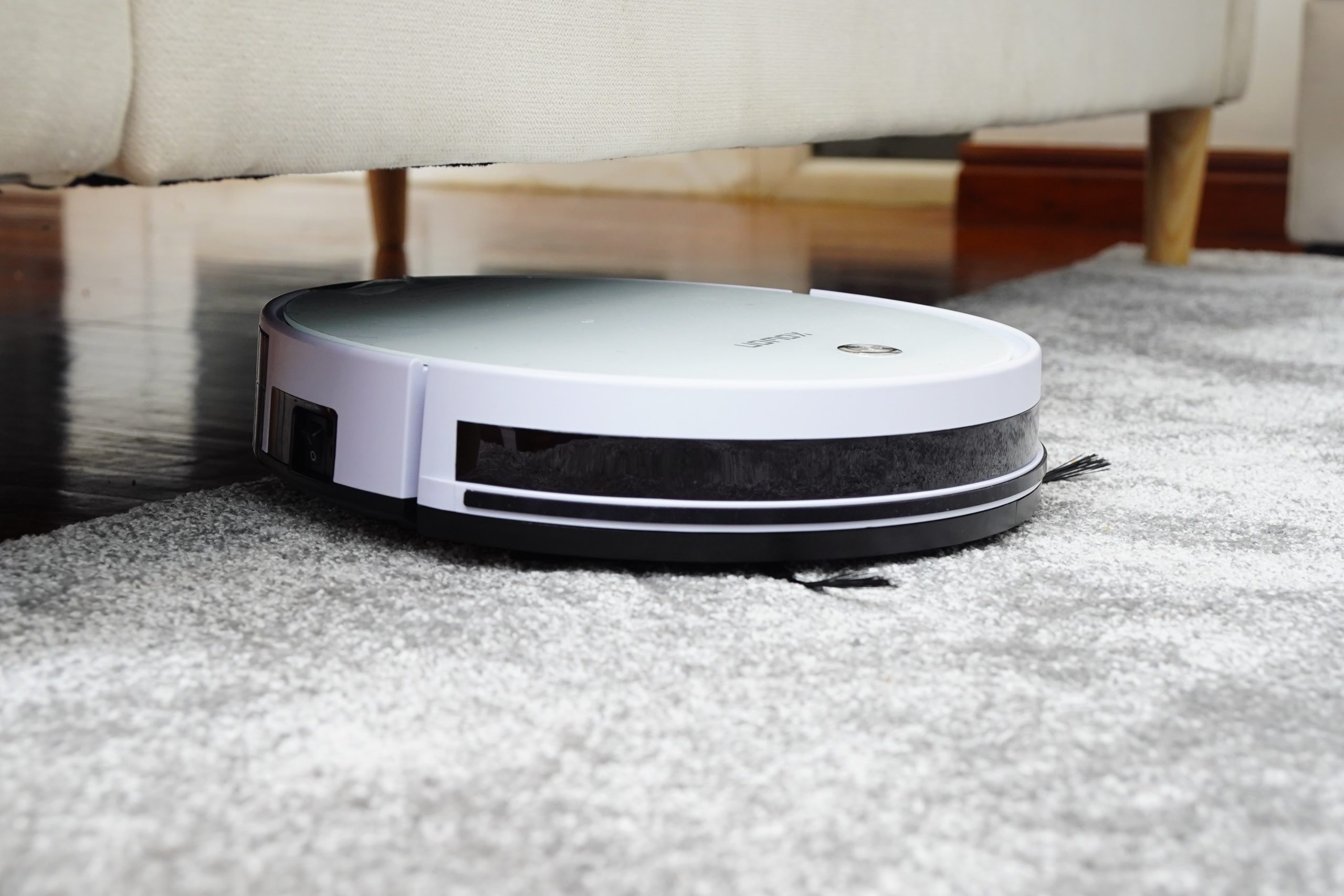
Researchers have discovered a new way for bad actors to listen to homeowners’ private conversations by hacking into their robot vacuums. Robot vacuums, such as Roombas, use smart sensors to autonomously operate. Attackers hack into the targets vacumes using the LiDAR smart sensors, with researchers thus giving the attacks the name “LidarPhone”. LiDAR stands for Light Detection and Ranging and is the remote sensing method robot vacumes use to sense when they are near to objects.  The LiDAR system uses light to detect where objects are with pulsed lasers measuring the distance from objects. This technology is what helps the robot vacuums to move around obstacles while cleaning the floor.

Fortunately, these LidarPhone attacks are actually rather complex. In order to perform such attacks, actors would need to have previously compromised the device itself. They would also have to be on the victim’s local network to launch the attack. This limits the threat of LidaPhone attacks but does not eliminate it all together of course.


ShareTweet
Previous Post

Nozomi Networks partners with Honeywell to strengthen OT cybersecurity

Next Post

Private pictures of female British athletes posted online after cyberattacks

Recent News

Nagomi Control Brings CTEM Into Action

IT Security Guru picks for Infosecurity Europe 2026

June 1, 2026
Nine in Ten Security Leaders Concerned About AI-Generated Code Risks as Salt Security Launches New Governance Tool

Nine in Ten Security Leaders Concerned About AI-Generated Code Risks as Salt Security Launches New Governance Tool

June 1, 2026
Acumen Cyber and AttackIQ Partner to Strengthen Cyber Defense Validation

Acumen Cyber and AttackIQ Partner to Strengthen Cyber Defense Validation

May 29, 2026
Check Point Launches AI Agents That Think Like Attackers as Autonomous Exploitation Reaches Critical Threat Level

Check Point Launches AI Agents That Think Like Attackers as Autonomous Exploitation Reaches Critical Threat Level

May 28, 2026

The IT Security Guru offers a daily news digest of all the best breaking IT security news stories first thing in the morning! Rather than you having to trawl through all the news feeds to find out what’s cooking, you can quickly get everything you need from this site!

Our Address: 10 London Mews, London, W2 1HY

Follow Us

© 2015 - 2024 IT Security Guru - Website Managed by Dessol

  • About Us
Manage Consent
To provide the best experiences, we use technologies like cookies to store and/or access device information. Consenting to these technologies will allow us to process data such as browsing behavior or unique IDs on this site. Not consenting or withdrawing consent, may adversely affect certain features and functions.
Functional Always active
The technical storage or access is strictly necessary for the legitimate purpose of enabling the use of a specific service explicitly requested by the subscriber or user, or for the sole purpose of carrying out the transmission of a communication over an electronic communications network.
Preferences
The technical storage or access is necessary for the legitimate purpose of storing preferences that are not requested by the subscriber or user.
Statistics
The technical storage or access that is used exclusively for statistical purposes. The technical storage or access that is used exclusively for anonymous statistical purposes. Without a subpoena, voluntary compliance on the part of your Internet Service Provider, or additional records from a third party, information stored or retrieved for this purpose alone cannot usually be used to identify you.
Marketing
The technical storage or access is required to create user profiles to send advertising, or to track the user on a website or across several websites for similar marketing purposes.
  • Manage options
  • Manage services
  • Manage {vendor_count} vendors
  • Read more about these purposes
View preferences
  • {title}
  • {title}
  • {title}
No Result
View All Result
  • Home
  • Features
  • Insight
  • Channel News
  • Events
    • Most Inspiring Women in Cyber 2026
  • Topics
    • Cloud Security
    • Cyber Crime
    • Cyber Warfare
    • Data Protection
    • DDoS
    • Hacking
    • Malware, Phishing and Ransomware
    • Mobile Security
    • Network Security
    • Regulation
    • Skills Gap
    • The Internet of Things
    • Threat Detection
    • AI and Machine Learning
    • Industrial Internet of Things
  • Multimedia
  • Product Reviews
  • About Us

© 2015 - 2024 IT Security Guru - Website Managed by Dessol