Eskenzi PR ad banner Eskenzi PR ad banner
  • About Us
Thursday, 4 June, 2026
IT Security Guru
Eskenzi PR banner
  • Home
  • Features
  • Insight
  • Channel News
  • Events
    • Most Inspiring Women in Cyber 2026
  • Topics
    • Cloud Security
    • Cyber Crime
    • Cyber Warfare
    • Data Protection
    • DDoS
    • Hacking
    • Malware, Phishing and Ransomware
    • Mobile Security
    • Network Security
    • Regulation
    • Skills Gap
    • The Internet of Things
    • Threat Detection
    • AI and Machine Learning
    • Industrial Internet of Things
  • Multimedia
  • Product Reviews
  • About Us
No Result
View All Result
  • Home
  • Features
  • Insight
  • Channel News
  • Events
    • Most Inspiring Women in Cyber 2026
  • Topics
    • Cloud Security
    • Cyber Crime
    • Cyber Warfare
    • Data Protection
    • DDoS
    • Hacking
    • Malware, Phishing and Ransomware
    • Mobile Security
    • Network Security
    • Regulation
    • Skills Gap
    • The Internet of Things
    • Threat Detection
    • AI and Machine Learning
    • Industrial Internet of Things
  • Multimedia
  • Product Reviews
  • About Us
No Result
View All Result
IT Security Guru
No Result
View All Result

The Journey to Secure Access Service Edge (SASE)

By Dan Kendal, Senior Systems Engineer, Central Government, Fortinet UK

by The Gurus
September 22, 2023
in Featured
The Journey to Secure Access Service Edge (SASE)
Share on FacebookShare on Twitter

“The wise adapt themselves to circumstances, as water moulds itself to the pitcher.” – Chinese Proverb.

The way we work, socialise, and consume information has changed exponentially over the last few years. This has been driven owing to global macro and micro events, such as world health emergencies or the continued march of technological innovation. The result is our ability to understand, publish and consume information has changed radically.

Governments and businesses need to keep pace with the changing landscape of how society uses these evolutions and in doing so need to adapt their business models, security efficacy and accessibility for their users.

One such example is the explosion of remote work, coupled with the continued march towards ‘cloud-first’ technology consumption. Resulting in expectations from both internal and external stakeholders that services should always be accessible, fast, and secure. This presents a challenge: How do we secure such a disparate infrastructure where sensitive information is stored in various places, from datacentres to SaaS Services like Microsoft 365 and personal end-user devices?

Securing the user from the endpoint through to the application itself has become a key battleground in the protection of information, detection of data exfiltration, shadow IT, even network and endpoint health for pre-emptive troubleshooting. Typically, organisations need to retro-fit controls, tools, and policies into systems with varying levels of technical debt resulting in a disjointed approach. The culmination of this approach often sees multiple point tools with little-to-no integration being deployed. Ultimately presenting their own set of challenges to the organisation.

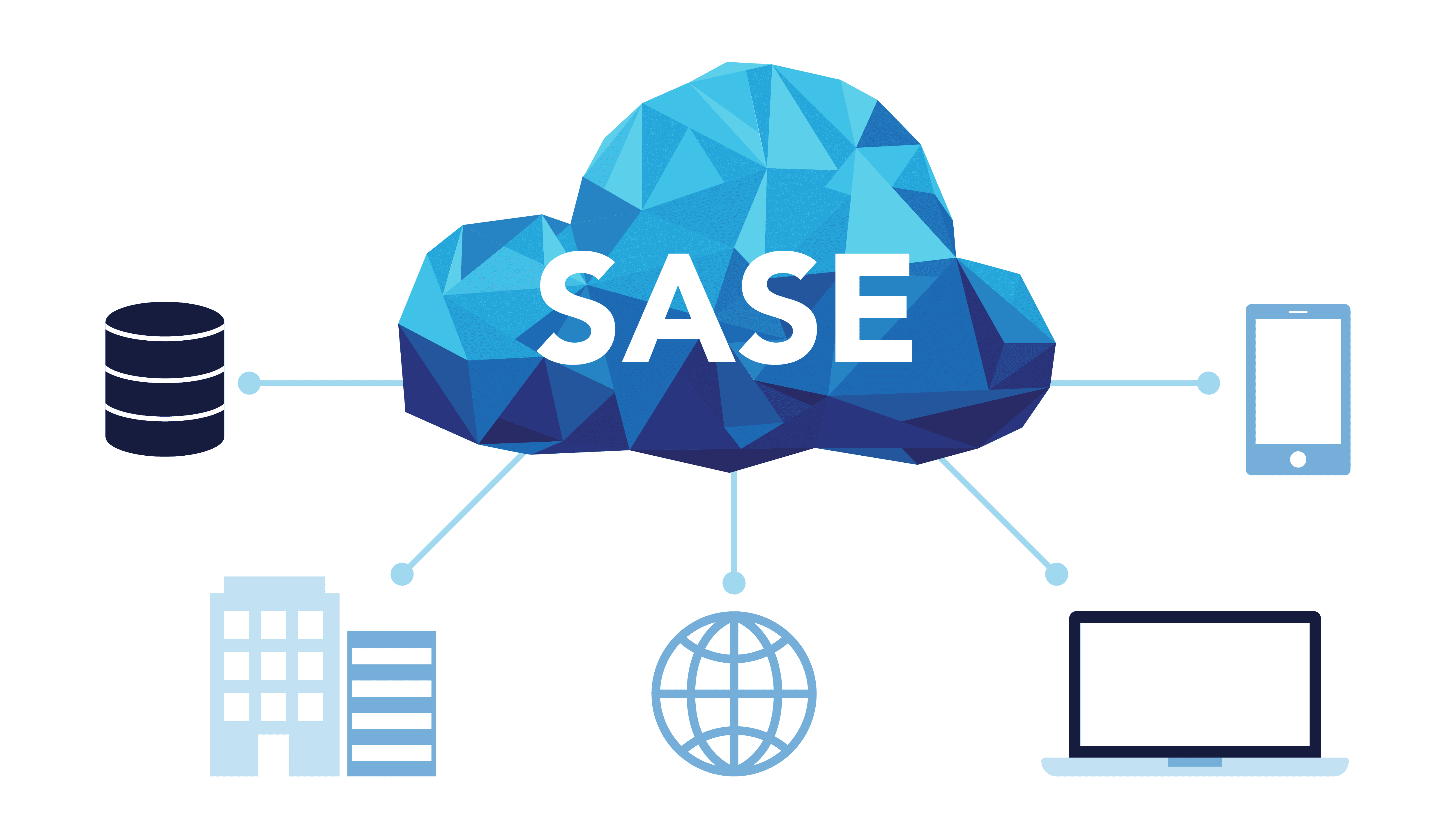
Another approach organisations are taking is to centralise security and network within one platform. This is called Secure Access Service Edge or SASE (for those of you wondering, it’s pronounced SASY). Simply put, SASE is a cloud-delivered, centrally managed security solution that encompasses network-level capability in a Software Defined Wide Area Network (SD-WAN). Both Gartner and Forrester have released their respective analysis on who they believe to be the players in SD-WAN and SASE.
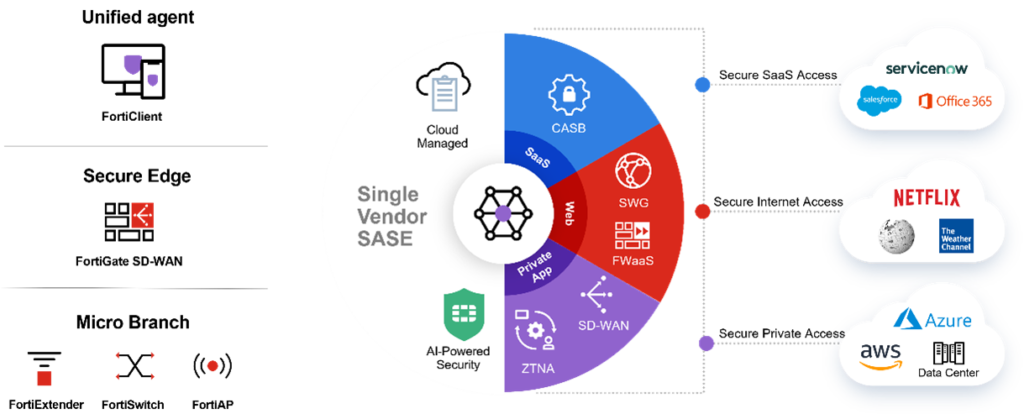
Figure 1: SASE Architecture

A SASE architecture has the potential to enable organisations to design flexibility and scalability into their operational model without compromising security or user experience. The integrated nature of the platform means it is a strong launch pad for the adoption of granular Zero-Trust Access (ZTA) controls to organisations’ data and that of their customers.

The effective implementation of a SASE Architecture involves a deep understanding of the network, security, and end-user requirements to be successful. Typically, this means engaging multiple different teams in the organisation to clearly define requirements as well as what is supported. Next, we need to engage operational teams to define what they need to see to be able to support the organisation. For example, Digital Experience Monitoring (DEM), network-level events and logs. This may sound daunting, but doing this early on can mean the organisation can have a clearly defined roadmap for the adoption of a single technology that can cater for a multitude of different use cases from one platform. This drives down the Total Cost of Ownership (TCO) to the organisation using a common set of tools and skills within the respective teams.

Fortinet’s approach to SASE looks to extend far further than the current solutions, coining the term Universal SASE. Imagine an architecture where a single platform can secure and provide actionable intelligence for the network, endpoint, SaaS services, experience monitoring, IoT/OT equipment and even branch switches and access points. “A pipe dream”, I hear you shouting? Well, with Fortinet this is quickly becoming possible through the centralised management ethos and world-class security capabilities from FortiGuard Labs.
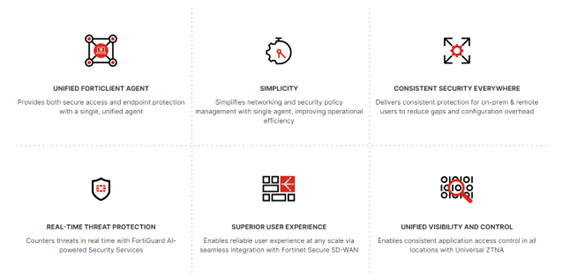


Figure 2: Some features and benefits of the Fortinet SASE solution

For a lot of organisations, the move from a traditional siloed network and security ecosystem is not a simple endeavour. Therefore, we need to map out a journey to get organisations to a point where they can utilise this flexible security and network method with ease. This is what a world-class cybersecurity partner can do for you.

Let us recall that proverb: The wise adapt themselves to circumstances. Find out more about how Fortinet is helping guide organisations to adopt a SASE architecture at the International Cyber Expo at Stand P70. Come and listen to my product innovation session at the Tech Hub stage called ‘The Journey to Secure Access Service Edge (SASE)’ at 13:25-13:45 on the 26th of September.

By Dan Kendal, Senior Systems Engineer, Central Government, Fortinet UK

ShareTweet
Previous Post

WatchGuard acquires CyGlass for AI-powered network anomaly detection

Next Post

Nurturing Our Cyber Talent

Recent News

Nagomi Control Brings CTEM Into Action

IT Security Guru picks for Infosecurity Europe 2026

June 1, 2026
Nine in Ten Security Leaders Concerned About AI-Generated Code Risks as Salt Security Launches New Governance Tool

Nine in Ten Security Leaders Concerned About AI-Generated Code Risks as Salt Security Launches New Governance Tool

June 1, 2026
Acumen Cyber and AttackIQ Partner to Strengthen Cyber Defense Validation

Acumen Cyber and AttackIQ Partner to Strengthen Cyber Defense Validation

May 29, 2026
Check Point Launches AI Agents That Think Like Attackers as Autonomous Exploitation Reaches Critical Threat Level

Check Point Launches AI Agents That Think Like Attackers as Autonomous Exploitation Reaches Critical Threat Level

May 28, 2026

The IT Security Guru offers a daily news digest of all the best breaking IT security news stories first thing in the morning! Rather than you having to trawl through all the news feeds to find out what’s cooking, you can quickly get everything you need from this site!

Our Address: 10 London Mews, London, W2 1HY

Follow Us

© 2015 - 2024 IT Security Guru - Website Managed by Dessol

  • About Us
Manage Consent
To provide the best experiences, we use technologies like cookies to store and/or access device information. Consenting to these technologies will allow us to process data such as browsing behavior or unique IDs on this site. Not consenting or withdrawing consent, may adversely affect certain features and functions.
Functional Always active
The technical storage or access is strictly necessary for the legitimate purpose of enabling the use of a specific service explicitly requested by the subscriber or user, or for the sole purpose of carrying out the transmission of a communication over an electronic communications network.
Preferences
The technical storage or access is necessary for the legitimate purpose of storing preferences that are not requested by the subscriber or user.
Statistics
The technical storage or access that is used exclusively for statistical purposes. The technical storage or access that is used exclusively for anonymous statistical purposes. Without a subpoena, voluntary compliance on the part of your Internet Service Provider, or additional records from a third party, information stored or retrieved for this purpose alone cannot usually be used to identify you.
Marketing
The technical storage or access is required to create user profiles to send advertising, or to track the user on a website or across several websites for similar marketing purposes.
  • Manage options
  • Manage services
  • Manage {vendor_count} vendors
  • Read more about these purposes
View preferences
  • {title}
  • {title}
  • {title}
No Result
View All Result
  • Home
  • Features
  • Insight
  • Channel News
  • Events
    • Most Inspiring Women in Cyber 2026
  • Topics
    • Cloud Security
    • Cyber Crime
    • Cyber Warfare
    • Data Protection
    • DDoS
    • Hacking
    • Malware, Phishing and Ransomware
    • Mobile Security
    • Network Security
    • Regulation
    • Skills Gap
    • The Internet of Things
    • Threat Detection
    • AI and Machine Learning
    • Industrial Internet of Things
  • Multimedia
  • Product Reviews
  • About Us

© 2015 - 2024 IT Security Guru - Website Managed by Dessol