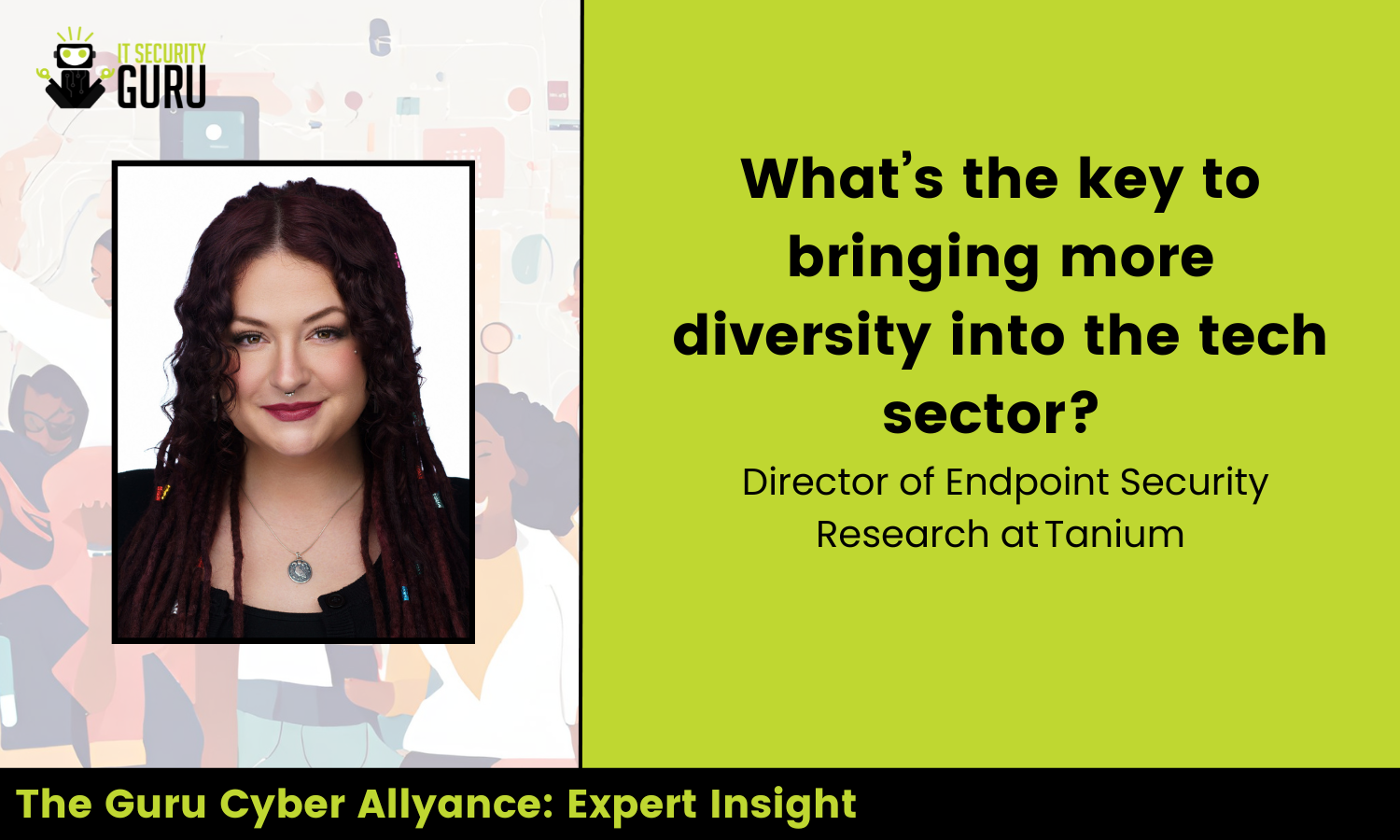
It’s often argued that the lack of women and non-binary individuals in tech is due to inadequate support, insufficient attention — especially from senior management — and a dearth of those candidates studying subjects such as science, technology, engineering, and mathematics (STEM). It’s a narrative that regularly gets repeated as a part of the conversation about diversity in tech. But the unfortunate reality is that the issues at hand go much deeper.

While simply recognising the problem and having these conversations is a huge step in the right direction, the industry still has a way to go when it comes to gender balance.
Today, there are plenty of women who join our industry with ambitions to lead fulfilling, successful, and rewarding careers, and they come from all walks of life. This is a big improvement from days gone by – and long may it continue.
But, while small steps have been taken to balance the scales, women and non-binary individuals are still vastly outnumbered in these industries. A positive change is long overdue. So, what’s the solution to this longstanding issue?
Widening the talent pool
To broaden their talent pool, businesses within the tech industry should be identifying new recruits through more alternative channels. Community colleges and capture-the-flag events that are designed to test and develop computer security skills in a competitive space are a great place to start. These environments are full of some of the most passionate, eager individuals who may not be getting offers elsewhere because they didn’t attend a top-tier school. I’ve seen it with my own eyes. Identifying new talent from non-traditional channels helps to create a more diverse workforce. Discovering this untapped talent – and keeping hold of it – is exactly what the tech sector needs.
I’m not alone in thinking this way. My colleague, Stephanie Aceves, Senior Director of Product Management at Tanium, also believes that many companies are simply looking in the wrong place.
“One of the reasons we see poor retention for women is because we often limit the focus to diverse recruiting and forget to create environments within our companies that are attractive to female team members,” she said. “Often, women end up somewhat disillusioned in the IT space when they realise that ‘space’ was really never made for them. That’s why we need to act in a way that shows women on the team have a space and are thought of during each phase of their careers.”
Women are being forced out of the industry
But all this effort to recruit new talent is wasted if the industry fails to keep up with the times. Finding talented new employees who are female or non-binary is the first step, but retaining those workers long-term remains a significant challenge.
Personally, I’m passionate about encouraging more women and non-binary individuals to get into IT and cybersecurity – and to remain there throughout their careers. However, more can be done to instil this same level of commitment into the industry as a whole. And when it comes to the reasons those individuals are leaving the sector, the same issues continue to crop up.
While improvements have been made in recent years, many sectors still fail to support the family goals and commitments of women, and the IT and tech industries are no different. Regardless of the skills or potential that an individual has, they may still decide to leave the job – or even the industry itself – because of a non-existent work-life balance or seeming lack of support that they’re offered to manage their other life loyalties.
And, while work has been done to stamp out such attitudes, talented workers could also turn their back on an industry due to the presence of outdated toxic behaviours and opinions within that space.
Despite all the progress that’s been made – and there has been progress – too many women and non-binary individuals are intimidated by what’s seen as the ‘tech bro culture.’ When such an ethos does exist within a company, it’s a systemic issue that can, in some workplaces, foster sexism and harassment – and it’s hard to stamp out.
While less widespread than in the past, it only takes one person to harbour misogynistic views to force dozens of people to quit or even reject offers of employment in the first place.
Offering better benefits and policies
It’s clear that the industry needs to do more to entice female and non-binary workers into the sector and retain existing team members. This means a full commitment from the sector as a whole, rather than individuals tinkering around the edges.
Working together to make the industry more family-friendly and appealing to women is paramount. With this in mind, the three reforms that I would introduce as a matter of urgency are:
- We need to recruit from non-traditional avenues and welcome back those who have taken a break to start a family.
- We need generous parental leave policies, childcare subsidies and healthy levels of personal time off.
- We need to create a supportive environment for those who need leave to start a family or flexible working arrangements to care for dependents.
While these three points seem to primarily support employees who want to have children, the policies benefit parents and non-parents alike. Reducing the likelihood of burnout from overwork at home and in the office, as well as allowing time to care for extended family and one’s mental well-being brings positives for the workforce as a whole.
Incorporating new perspectives, voices and minds can lead to organisations switching up approaches within the business, positively impacting the culture and broadening the company’s appeal to new users or employees. By bringing fresh, different and diverse ways of thinking into the workforce, the wider company always benefits.
Diversity is key to narrowing the skills gap
After all, diversity goes beyond standard demographics. If we are ever to narrow the skills gap that exists in the industry, we need to attract as many different types of people as possible. But there is little point in focusing on recruitment if we fail to provide attractive conditions and fair pay.
Instead of searching for “unicorns” who can do — and know — “everything,” we need to nurture the talent we already have, shaping every employee into a well-rounded, experienced professional. That includes setting aside time for mentorship programmes which help to diversify employee skill sets and build more peer leadership among teams.
Some of the most high-performing teams I’ve worked with have been made up of those who have started a tech career elsewhere — in retail, hospitality, finance, or healthcare — before entering IT.
Despite their different backgrounds, they bring unique insights as consumers of technology and security decision-makers. In my experience, they are able to lend valuable empathy for how security planning will impact other parts of business and unique insights into how to increase adoption and compliance.
Teams where members come from different academic backgrounds — or who offer different professional expertise — also perform well. Having a group that has learned how to solve problems through different examples and curricula means you’re maximising the opportunity for innovation to emerge.
It doesn’t matter which way you look at it: diversity delivers in so many ways and on so many levels. It’s time for the industry to remove barriers and create space. It’s time to act.