Eskenzi PR ad banner Eskenzi PR ad banner
  • About Us
Sunday, 21 June, 2026
IT Security Guru
Eskenzi PR banner
  • Home
  • Features
  • Insight
  • Channel News
  • Events
    • Most Inspiring Women in Cyber 2026
  • Topics
    • Cloud Security
    • Cyber Crime
    • Cyber Warfare
    • Data Protection
    • DDoS
    • Hacking
    • Malware, Phishing and Ransomware
    • Mobile Security
    • Network Security
    • Regulation
    • Skills Gap
    • The Internet of Things
    • Threat Detection
    • AI and Machine Learning
    • Industrial Internet of Things
  • Multimedia
  • Product Reviews
  • About Us
No Result
View All Result
  • Home
  • Features
  • Insight
  • Channel News
  • Events
    • Most Inspiring Women in Cyber 2026
  • Topics
    • Cloud Security
    • Cyber Crime
    • Cyber Warfare
    • Data Protection
    • DDoS
    • Hacking
    • Malware, Phishing and Ransomware
    • Mobile Security
    • Network Security
    • Regulation
    • Skills Gap
    • The Internet of Things
    • Threat Detection
    • AI and Machine Learning
    • Industrial Internet of Things
  • Multimedia
  • Product Reviews
  • About Us
No Result
View All Result
IT Security Guru
No Result
View All Result

Industrial routers bear the brunt of OT cyberattacks, new Forescout research finds

by Guru Writer
December 18, 2025
in Featured
Researchers Uncover Zero-Day Vulnerability on Cisco Routers
Share on FacebookShare on Twitter

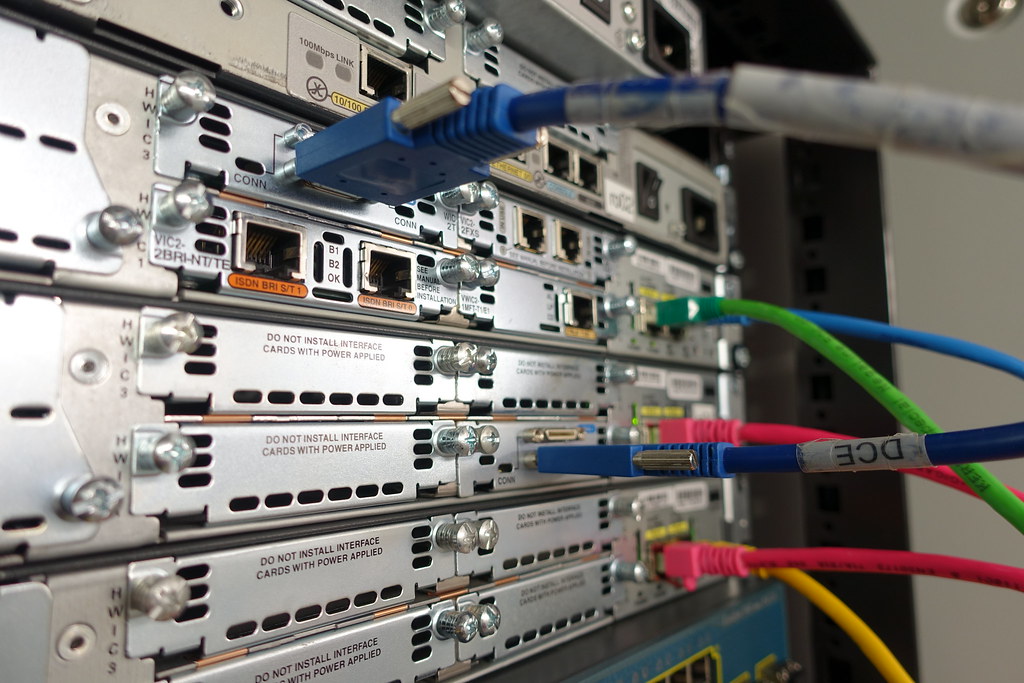
Industrial routers and other OT perimeter devices are absorbing the majority of cyberattacks targeting operational technology environments, according to new Forescout Vedere Labs research.

Analysing 90 days of real-world honeypot data, researchers found that 67% of malicious activity was directed at OT perimeter devices, such as industrial routers and firewalls, compared with 33% aimed at directly exposed OT assets like PLCs and HMIs.

The findings highlight the growing risk facing edge devices that sit between IT and OT networks.

Automated attacks dominate the OT perimeter

The research shows that OT environments are under constant, automated attack, with more than 60 million requests logged across 11 devices in just three months. Once high-volume SNMP fingerprinting traffic was removed, the remaining 3.5 million events revealed that industrial firewalls and routers were the most heavily targeted assets.

Attackers overwhelmingly relied on SSH and Telnet brute-force attempts, which accounted for 72% of perimeter attacks. Many of the credentials used were drawn from well-known default IoT password lists that have circulated for almost a decade, underlining the persistent risk posed by weak or unchanged credentials.

HTTP and HTTPS traffic made up a further 24% of attacks, including thousands of automated exploit attempts designed to force devices to download malware from external servers.

Emerging botnets raise concerns

Researchers identified several malware families actively targeting OT perimeter devices, including RondoDox, Redtail, and ShadowV2. Of these, RondoDox stood out as the most prevalent, responsible for 59% of observed malicious HTTP activity.

RondoDox is a relatively new botnet that has rapidly expanded its exploit arsenal to include more than 50 known vulnerabilities, many without assigned CVEs. While most current exploits focus on IT and IoT devices, researchers warn that the addition of industrial router vulnerabilities could quickly increase the risk to critical infrastructure operators.

ShadowV2, first observed only months ago, has already become the third most common botnet in the dataset, demonstrating how quickly new automated threats are emerging.

Chaya_005: a long-running reconnaissance campaign

One of the most significant findings was the discovery of a previously undocumented activity cluster, dubbed Chaya_005. Active for at least two years, Chaya_005 appears to focus on fingerprinting and capability testing of industrial edge devices, rather than immediate mass exploitation.

The campaign initially included a successful exploit against a legacy Sierra Wireless router, before evolving into a broader set of malformed exploit attempts against multiple vendors’ devices. Researchers believe the activity may be designed to identify which devices are vulnerable to specific command-execution techniques, potentially for future exploitation or monetisation.

Unlike typical botnets, Chaya_005 showed no evidence of indiscriminate scanning or follow-on attacks, suggesting a more deliberate and targeted reconnaissance effort.

Hacktivists and OT expand the threat surface

The research also highlights the growing interest of hacktivist groups in OT targets. In one incident, the pro-Russian group TwoNet compromised and defaced a water treatment HMI in Forescout’s adversary engagement environment.

While such attacks often rely on manual exploitation, the data shows that routers, PLCs, HMIs and even IP cameras are routinely targeted by automated scanners and botnets, blurring the traditional distinction between IT and OT threats.

Security teams urged to rethink IT/OT boundaries

Forescout warns that treating attacks as “IT-only” or “OT-only” is increasingly dangerous. Automated malware does not distinguish between environments, and compromised IT devices at the OT perimeter can serve as a stepping stone into critical systems.

To reduce risk, researchers recommend that organisations harden OT devices, eliminate weak credentials, avoid exposing industrial equipment directly to the internet, and implement OT-aware monitoring capable of detecting malicious behaviour specific to industrial protocols.


Tags: cyberattacksOTResearch
ShareTweet
Previous Post

New deepfake training from KnowBe4 – see it in action!

Next Post

Salt Security Unveils its “12 Months of Innovation”

Recent News

AI Needs Human Expertise: How Securonix and Acora Are Transforming Security Operations

AI Needs Human Expertise: How Securonix and Acora Are Transforming Security Operations

June 19, 2026
75% of Organisations Have Gaps in Core Security Controls, Research Finds

More than 60% of Organisations Report Cyberattacks Spreading Beyond Email Into Teams, Slack and SMS, Finds New Research From KnowBe4

June 19, 2026
Frontline Workers Twice as Likely to Use Unapproved AI

VerifyLabs.AI Brings Deepfake Detection to Android After a recent IOS release

June 19, 2026
Proton removes the last barrier to leaving Google Workspace

Proton removes the last barrier to leaving Google Workspace

June 17, 2026

The IT Security Guru offers a daily news digest of all the best breaking IT security news stories first thing in the morning! Rather than you having to trawl through all the news feeds to find out what’s cooking, you can quickly get everything you need from this site!

Our Address: 10 London Mews, London, W2 1HY

Follow Us

© 2015 - 2024 IT Security Guru - Website Managed by Dessol

  • About Us
Manage Consent
To provide the best experiences, we use technologies like cookies to store and/or access device information. Consenting to these technologies will allow us to process data such as browsing behavior or unique IDs on this site. Not consenting or withdrawing consent, may adversely affect certain features and functions.
Functional Always active
The technical storage or access is strictly necessary for the legitimate purpose of enabling the use of a specific service explicitly requested by the subscriber or user, or for the sole purpose of carrying out the transmission of a communication over an electronic communications network.
Preferences
The technical storage or access is necessary for the legitimate purpose of storing preferences that are not requested by the subscriber or user.
Statistics
The technical storage or access that is used exclusively for statistical purposes. The technical storage or access that is used exclusively for anonymous statistical purposes. Without a subpoena, voluntary compliance on the part of your Internet Service Provider, or additional records from a third party, information stored or retrieved for this purpose alone cannot usually be used to identify you.
Marketing
The technical storage or access is required to create user profiles to send advertising, or to track the user on a website or across several websites for similar marketing purposes.
  • Manage options
  • Manage services
  • Manage {vendor_count} vendors
  • Read more about these purposes
View preferences
  • {title}
  • {title}
  • {title}
No Result
View All Result
  • Home
  • Features
  • Insight
  • Channel News
  • Events
    • Most Inspiring Women in Cyber 2026
  • Topics
    • Cloud Security
    • Cyber Crime
    • Cyber Warfare
    • Data Protection
    • DDoS
    • Hacking
    • Malware, Phishing and Ransomware
    • Mobile Security
    • Network Security
    • Regulation
    • Skills Gap
    • The Internet of Things
    • Threat Detection
    • AI and Machine Learning
    • Industrial Internet of Things
  • Multimedia
  • Product Reviews
  • About Us

© 2015 - 2024 IT Security Guru - Website Managed by Dessol