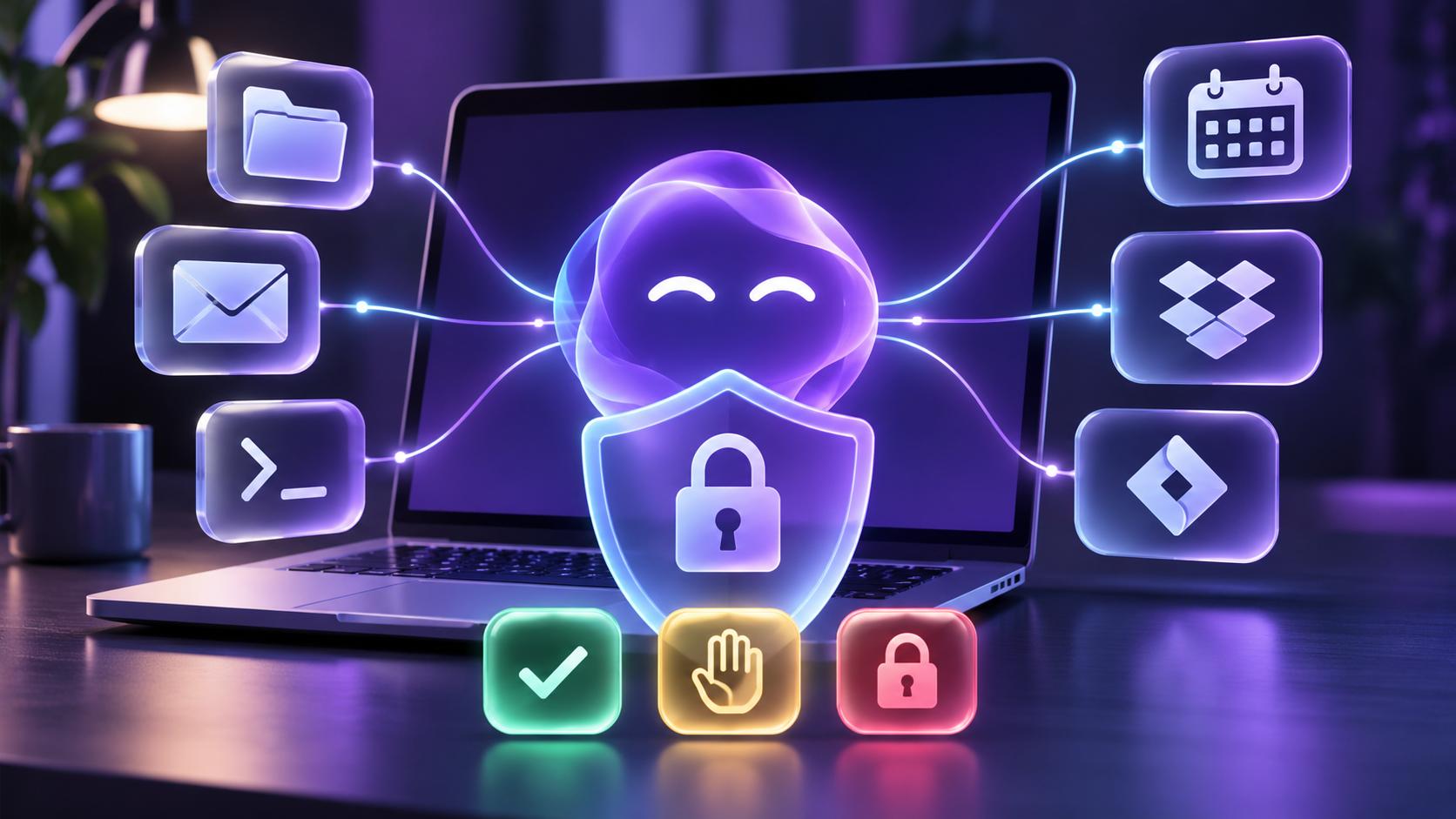
Proton has launched Lumo Desktop, a Windows, macOS and Linux app that turns its privacy-focused AI assistant into something closer to an agent. The update introduces three features – Connectors, Schedules and Skills – that allow Lumo to reach into a user’s files, inbox and business tools, run tasks on a timer and remember how its owner likes things done.

Giving an AI assistant that kind of reach raises obvious security questions, and Proton is pitching granular control as the answer. For every connector, users can choose which actions Lumo may carry out automatically, which require approval and which are blocked entirely. Proton’s own example: Lumo can be allowed to search an inbox, made to ask before sending an email, and prevented from deleting messages at all.
What Lumo can now reach
Connectors cover a broad attack surface, which makes those permissions matter. Supported integrations include:
- Local tools: filesystem access, shell execution and browser content fetching.
- Proton Mail: via Proton Mail Bridge.
- Third-party services: Dropbox for personal files, plus Jira and Confluence for workplace use.
- MCP: custom local or remote Model Context Protocol servers.
Connected tools are switched on in conversations by default; users can disable individual connectors from each conversation’s Tools menu. Security teams will want to note both the default and the inclusion of shell execution when assessing the app for managed endpoints.
Schedules apply the same model to unattended work. Each scheduled task, such as a weekly inbox summary or a monthly spending review, carries its own permission set, and tasks can be edited, paused or deleted at any time.
Source code published
Proton is also publishing the source code for Lumo Desktop so the public can inspect the tools. The company describes this as the first step in a wider commitment to transparency about how it uses AI, including sharing tools it builds for internal use.
“As AI assistants become more capable, people should be able to benefit from that progress without giving up control over their personal data,” said Eamonn Maguire, Director of Engineering for AI at Proton.
Data handling
Proton says conversations and data from connected apps and files are never used to train AI models or to serve personalised ads. Chat history is protected by zero-access encryption, meaning only the user can read it – not Proton – and Lumo keeps no server-side logs. The limited data Lumo stores is covered by Swiss privacy law and hosted on European infrastructure, which Proton says places it outside the scope of the US CLOUD Act.
Lumo Desktop is available now for Windows, macOS and Linux. Existing Custom Lumos will be migrated automatically to the new Skills format.