Enterprise Security Operations Centers (SOCs) and Managed Security Service Providers (MSSPs) have operated under a foundational assumption that scaling security requires hiring more people. When threat volumes increased, the hunt was on for more Tier-1 security analysts to help investigate and close out incoming threat alerts faster. Every time the enterprise infrastructure expanded, organizations purchased additional point products and assigned headcount to monitor them.

That outdated SecOps model has officially reached its limit, both economically and practically. The truth is, it hasn’t been sustainable for SecOps to scale by throwing more people at the problem for some time. The introduction of AI has simply illuminated the problem. Modern enterprise SOCs and MSSPs must investigate far more alerts, respond more quickly, and expand defenses across cloud, endpoint, network, and identity attack surfaces, all while operating amid persistent, structural staffing shortages and mounting financial pressures.
Something’s got to give. The math has been broken for far too long. To resolve the crisis, the industry must move beyond treating AI as an incremental assistant or a superficial alert summarizer and examine the economics of the situation. To have any chance against attackers, who are upping the ante and increasing their sophistication, SecOps must transition to a human-augmented, verdict-first operating model powered by agentic AI.
Machine-Speed Attacks vs. Manual Triage
The underlying driver of this shift is time. More specifically, Mean Time to Detect (MTTD), the average elapsed time between the first occurrence of a security threat or system fault, and the time at which an organization or monitoring tool identifies it. And as the old saying goes, time is money.
Threat actors have already been leveraging AI, automation, and frontier LLMs to accelerate and increase the sophistication and scale of attacks. Recent industry reports indicate that the time required for bad actors to move from initial access to full data exfiltration has dropped to approximately 72 minutes. In widespread automation events, such as the Axiom incident, exploitation of vulnerabilities and credential exfiltration across massive host environments occurred within a handful of hours.
Attackers, emboldened by these automation tools, are relying less on traditional malware to breach networks. Instead, the new crown jewels are stolen user credentials and compromised service accounts. At first glance, these identity-led attacks look like legitimate activity, making them exceptionally difficult for legacy correlation rules to flag without deeper contextual analysis.
When facing an onslaught of machine-speed security intrusions, traditional, human-led triage creates a bottleneck. The average Tier-1 alert investigation takes a human analyst 30 to 45 minutes, with complex cases taking 2 to 4 hours. According to the Microsoft SOC 2026 Report, non-actionable false positives make up 46% of total threat alert volume. Chasing these false alerts is draining nearly half of an analyst’s daily throughput without delivering much defensive value.
These findings align with the 2025 SANS Detection and Response Survey, in which 73% of SecOps teams cited false positives as their primary detection obstacle.
When an adversary exfiltrates sensitive data in under an hour, an operational model that relies on sifting through a mountain of false positives in an ever-increasing ticket queue means defenders have lost before an analyst even opens the ticket.
The Financial Consequences of Tool Sprawl
Adding to the false-positive alert challenge is the operational drag of fragmented security stacks. Most SOCs and MSSPs operate a disconnected patchwork of SIEM, EDR, NDR, identity protection, cloud security, and threat intelligence tools. The average organization manages between 60 and 70 security tools across 10 to 15 different vendors, according to research cited by Deloitte WSJ and Gartner. Analysts spend a substantial portion of their working hours pivoting between disparate consoles, manually re-entering parameters, and stitching together missing context. This is even more time-consuming for MSSPs.
Every single “swivel-chair moment” in the SOC burns valuable investigation and response time. For MSSPs in particular, this inefficiency severely erodes profitability. Tier-1 triage leads to severe analyst burnout, high turnover, and soaring operational expenses. This is especially troubling in an industry where qualified human security professionals are already at a premium.
Attempting to solve machine-speed threats by throwing under-resourced humans at endless alert queues is no longer just inefficient—it is the wrong shape of solution entirely.
Transitioning to a Verdict-First Architecture
To break the efficiency bottleneck, security operations must shift from a “fire-first” workflow to a “verdict-first” architecture.
What does this mean?
In a traditional, fire-first model, static detection rules and audit logs trigger alerts and dump them into human queues for further investigation.
In a verdict-first model, such as the Verdict Signal Check (VSC) framework, raw detections must earn their way up a confidence ladder through automated, structured validation by an autonomous AI agent before reaching a human.
When a potential threat triggers this course of action, agentic AI agents can execute hundreds of investigative checks in real time. This includes:
- Threat Intel Enrichment: Automatically cross-referencing observables against active threat intelligence.
- Deep Telemetry Queries: Pulling endpoint behavior, process execution chains, and network flow data.
- Identity Context Checks: Assessing user behavior analytics (UEBA), impossible travel anomalies, privilege levels, and non-human account activity.
- Multi-Source Threat Correlation: Bringing together cross-domain telemetry with a consolidated incident narrative guided by MITRE ATT&CK framework mapping.
Rather than delivering a raw alert with zero context, an agentic system generates a fully-reasoned verdict, backed by an auditable evidence chain. Not a black box calling all the shots, but an agent that shows its work so human analysts can verify it.
The value of AI agents as threat investigators is especially impactful when measured in tangible time. In an independent operational study evaluating 138,475 real-world security alerts, automatic triage-trained AI agents matched the verdict of their human analyst counterparts with 99.7% accuracy. The agentic AI agents reduced triage response times from several hours down to approximately 1 minute and 15 seconds. Crucially, the AI agents automatically closed 64% of false positives and accurately escalated the remaining true threats requiring human judgment.
Redefining SOC Economics with AI Agents
The economic impact of agentic AI adoption in the SOC can be profound, especially for midmarket organizations with lean security teams. By deploying AI triage agents, SecOps can reduce analysts’ workload by approximately one workday per analyst each week. Overall, AI-powered auto triage agents demonstrate productivity gains exceeding 80% and false-positive reductions exceeding 90%.
This efficiency transforms SOC financial dynamics.
Consider these benefits:
- Scaling Detection and Response Without Increasing Headcount: Enterprises and MSSPs can handle significant increases in alert telemetry without scaling analyst headcount proportionally.
- Improving Service Profit Margins: MSSPs will be able to protect their service margins and deliver on SLA guarantees (such as lower MTTD and Mean Time to Contain) at a more predictable operational cost.
- Continuous Learning Yields Smarter Agents: Modern agentic systems are built on feedback loops that learn from analyst corrections and input. This increases the rate of correct verdicts on previously corrected alerts, helping to avoid repeating past triage mistakes.
The Evolving Role of the Human SOC Analyst
Contrary to what you may have heard, adopting AI in security operations doesn’t eliminate the human element. Instead, it elevates it, making human analysts more productive. The analyst’s position shifts from performing every manual triage step to “human-on-the-loop.” Instead of chasing down alerts, SOC agents are supervising autonomous systems, handling complex edge cases, giving AI agents feedback, and steering strategic security posture.
Junior analysts, in turn, make the transition from tedious ticket sorting to supervising AI workflows and conducting faster, more accurate incident response. They can shift the focus from manual data correlation to proactive threat hunting, detection engineering, and the refinement of AI feedback mechanisms. In short, the gruntwork is delegated to AI agents, so humans can focus on what they do best.
The AI SOC isn’t about black-box decision-making. Instead, the foundation of the AI SOC is governed access, tenant isolation, transparent reasoning, and explicit human authorization for high-impact containment actions. By pairing machine-speed agentic AI analysis with directed human judgment, organizations can finally solve the operational math of the modern SOC. As a result, they can finally achieve scalable, cost-effective, and highly resilient defensive systems.
About the author
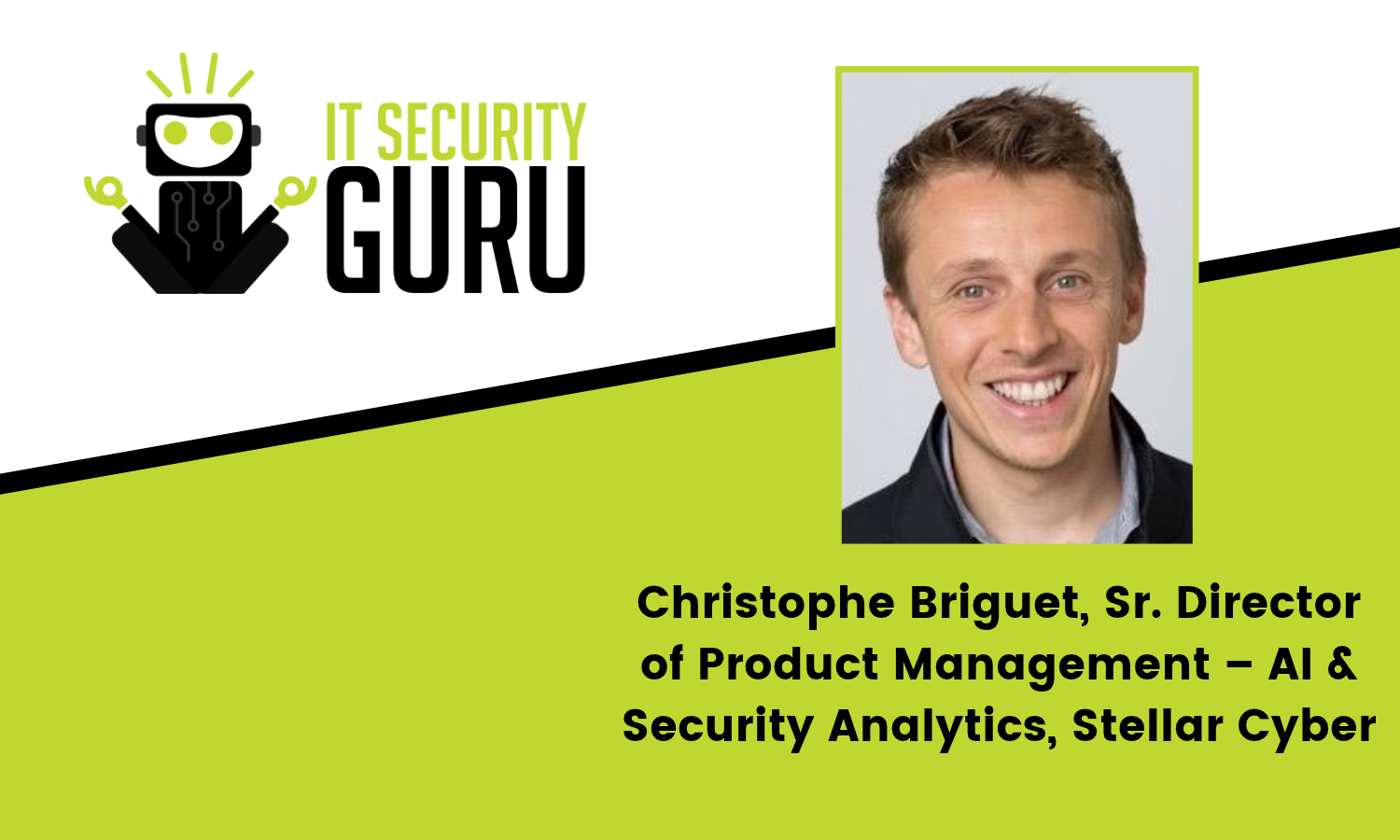
Christophe Briguet is Senior Director of Product Management – AI and Analytics at Stellar Cyber.